Condo Heat Pump Problems
Red fault lights, noise, ice and refrigerant leaks.
Understand the symptoms before replacing parts.
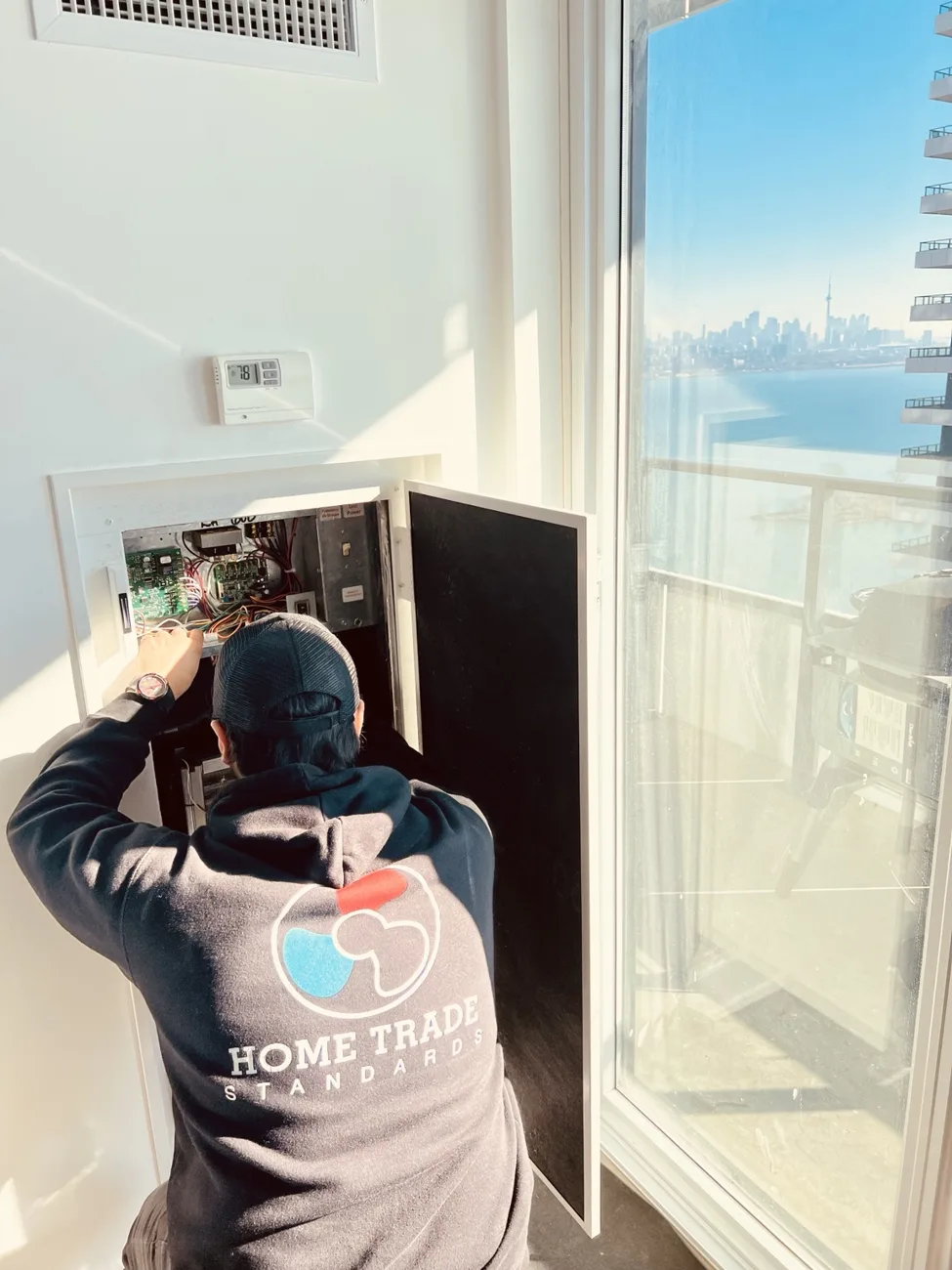
A condo heat pump that stops heating, develops ice or becomes unusually noisy needs a diagnosis before parts are replaced. Fault indicators help narrow the investigation, but the technician must check the equipment and operating conditions to establish the cause.
What do the red lights on an Omega heat pump mean?
Omega control boards use labelled indicators to help technicians identify protective shutdowns and operating conditions. Omega documentation identifies these abbreviations:
| Label | Meaning |
|---|---|
| HP / HPS | High-pressure protection / high-pressure switch |
| LP / LPS | Low-pressure protection / low-pressure switch |
| RST | Refrigerant suction temperature sensor |
| WLST | Water-loop supply temperature sensor |
| CO / COS | Condensate overflow / condensate overflow switch |
The exact alarm behaviour—including flashing versus steady lights—must be checked against the installed board’s manual. These labels identify the monitored condition or component; they do not independently establish which part needs replacement. Board versions differ, and colour alone is not enough to select the correct alarm chart.
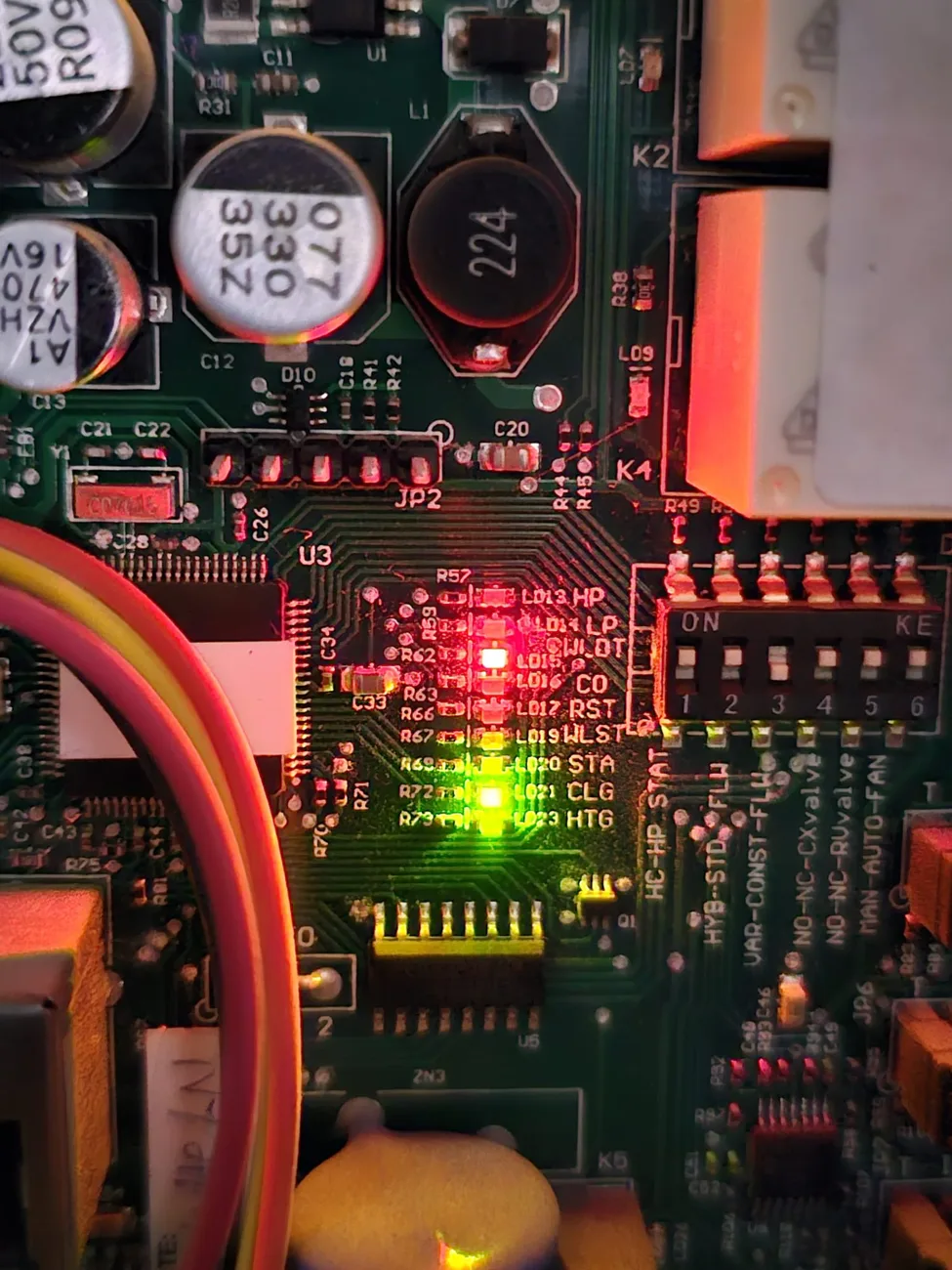
Before requesting service, record which labelled lights are illuminated and whether they are steady or flashing. A short video can help document the sequence. Avoid repeatedly resetting a unit that keeps returning to a fault. Do not open electrical covers to obtain a recording; ask your technician to document inaccessible indicators.
Why is my condo heat pump making noise?
Loose components and excessive vibration are common causes of heat-pump noise. A technician may need to inspect cabinet panels, fasteners, blower components, mounting points and contact between piping and surrounding surfaces.
Describe when the sound happens:
- Immediately when the fan starts.
- When the compressor starts or stops.
- Continuously while the unit operates.
- Only at a particular fan speed.
A recording with the original sound is useful. It helps distinguish a rattle, hum or intermittent vibration, although an on-site inspection is still needed to confirm the source.
Why is ice building up inside the heat pump?
Ice on the indoor coil during cooling can be associated with restricted airflow or a refrigeration problem. Possible causes include a blocked filter, a dirty coil, a blower problem or low refrigerant charge.
Ice does not automatically mean the system needs more refrigerant. The technician should investigate airflow and refrigeration conditions before recommending a repair.
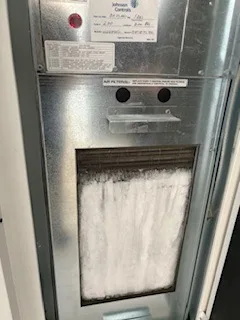
If ice is visible, stop cooling and arrange service. Do not chip it off or apply direct heat. Melting ice can also create a water-leak problem, so report any water around the cabinet.
Can a refrigerant leak come from the coil?
Yes. The coil and its tubing are part of the sealed refrigerant circuit. Damage or deterioration can allow refrigerant to escape.
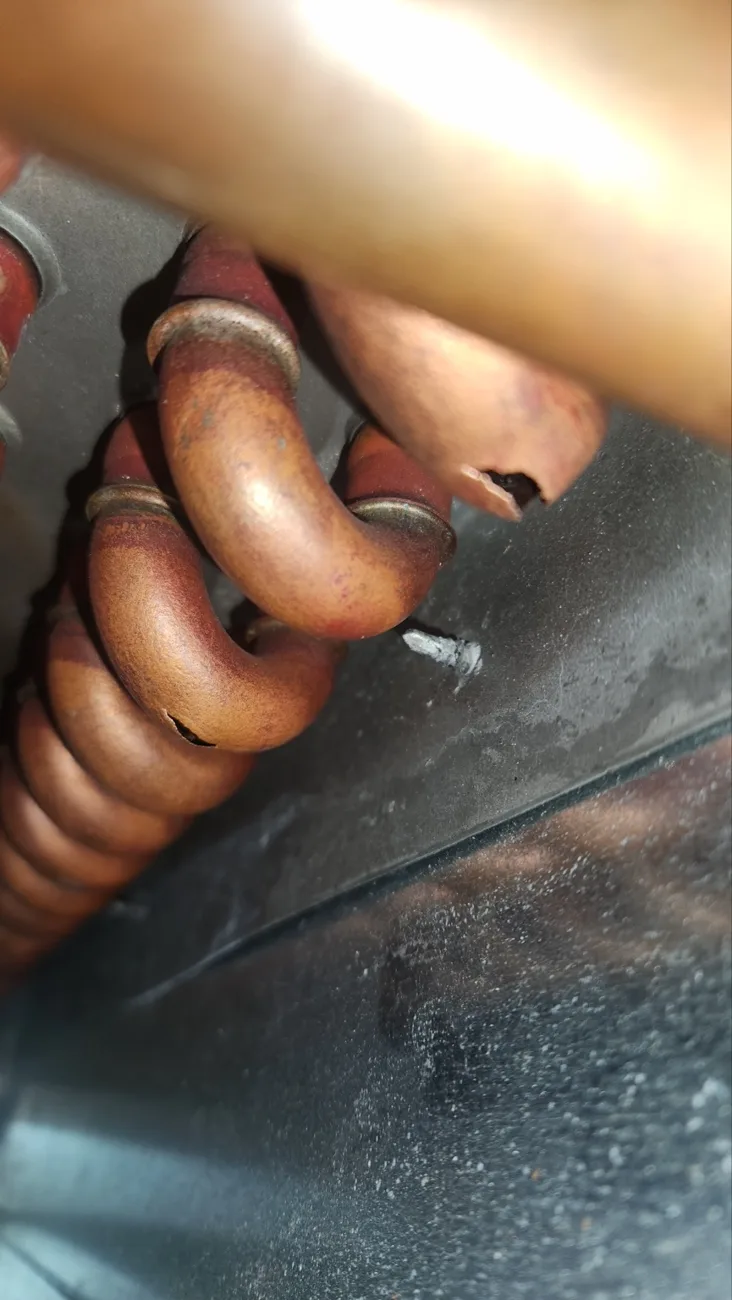
A suspected leak needs testing to establish its location and the repair scope. Adding refrigerant without addressing a confirmed leak does not correct the underlying problem.
Should the heat pump be repaired or replaced?
The decision depends on the confirmed fault, equipment condition, parts availability and the total repair scope.
A loose panel, controls problem or serviceable blower fault may call for a targeted repair. A damaged coil or repeated refrigeration failures may justify comparing repair with replacement.
Ask for a clear explanation of:
- What testing confirmed the problem.
- Which component needs attention.
- What the proposed work includes.
- Whether building coordination is required.
- How operation will be checked after the work.
Explore our condo heat pump service or equipment catalogue for the next step.
What should I send when booking service?
Send a full-unit photo, a readable model label and a short description of the symptom. Include a fault-light video or noise recording if available, along with when the issue started and any previous repairs.
Manufacturer references
Omega VSHP installation and operation manual · Omega VSHPe installation and operation manual
Use the literature that matches the installed equipment and control-board revision.