Air-Cooled Chillers
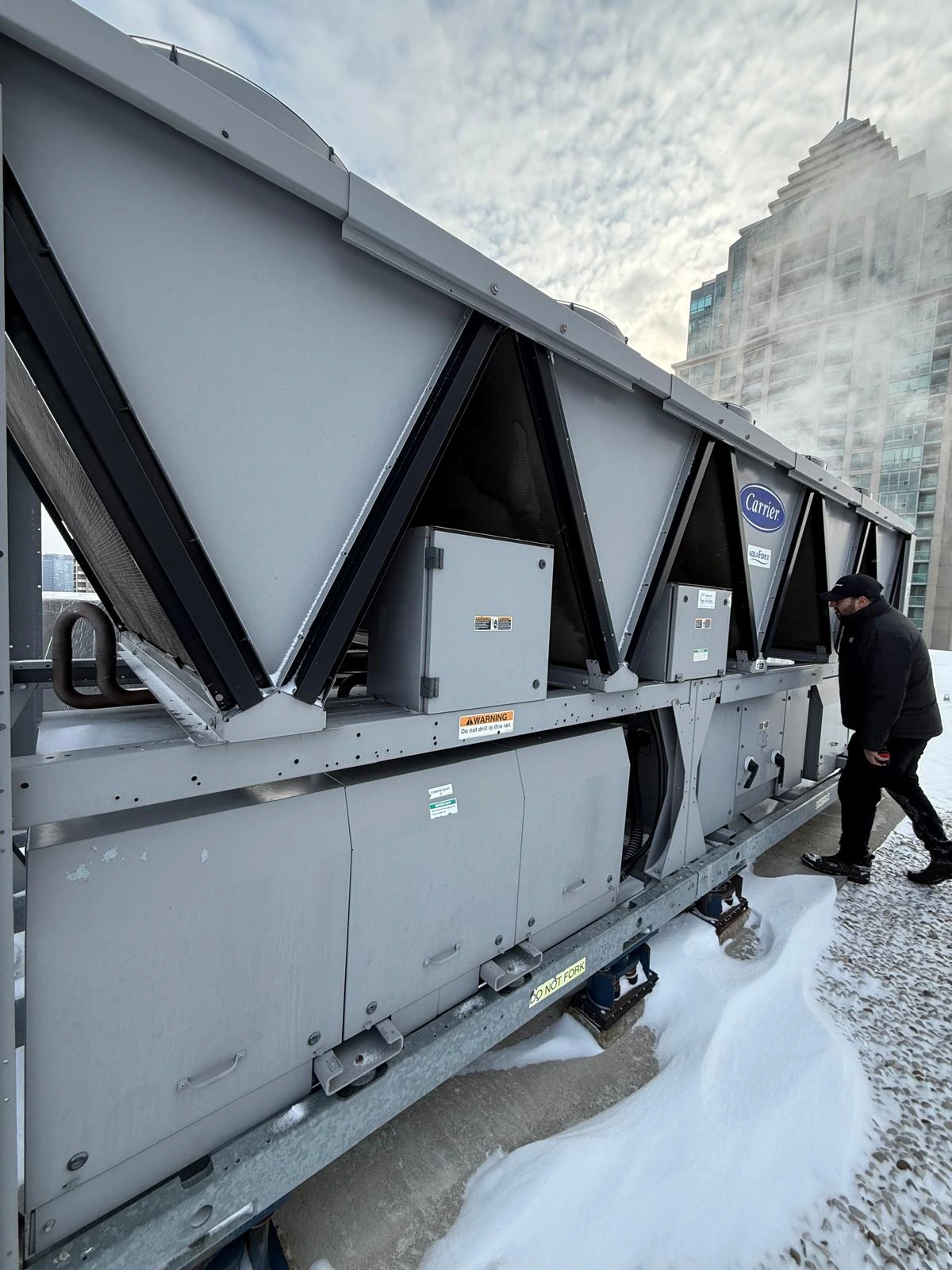
Outdoor chillers that reject heat through air-side condenser coils and fans. Review access, coil condition and the installed refrigeration configuration.
Chiller and cooling tower maintenance and repair in Toronto and the GTA. Define equipment checks, seasonal work and building coordination in a written service scope.
Cooling performance depends on the installed refrigeration equipment, water circulation, heat rejection and controls. A cooling complaint can begin at the chiller, a pump, the cooling tower or the distribution system.
HTS reviews the plant configuration and operating concerns before defining diagnostics, maintenance or corrective work. We coordinate access and shutdowns with management and identify when water treatment, controls support or engineering review belongs in a separate scope.
View the credentials and industry organizations displayed for Home Trade Standards.





Identify the chiller & cooling tower equipment and connections included in the assessment, including the shared systems that influence operation.
Outdoor chillers that reject heat through air-side condenser coils and fans. Review access, coil condition and the installed refrigeration configuration.
Chillers connected to a condenser-water system. Their operation must be considered alongside pumps, cooling towers and controls.
Open or closed-circuit equipment as installed; fans, drives, water distribution, fill, basin and associated controls.
Scroll, screw, centrifugal and modular plant arrangements, together with chilled-water pumps, valves and building distribution.
The chilled-water circuit collects heat from the building.
The chiller transfers that heat through its refrigeration cycle.
An air-cooled condenser or a condenser-water system rejects the heat.
In a water-cooled plant, the tower releases heat from condenser water.
Pumps and controls coordinate the water circuits with demand.
Use the reported symptoms and operating history to guide diagnosis of the chiller & cooling tower system before defining a repair.
Compare reported conditions with chiller operation, water temperatures, circulation and control response.
Review the recorded fault, operating conditions and heat-rejection path. A fault message alone does not identify the repair.
Investigate the accessible fan, drive, supports and distribution components within the agreed scope.
Review equipment condition, strainers, water-side observations and service history; define any further testing or treatment work.
Separate routine care from corrective work when defining the chiller & cooling tower service scope and follow-up priorities.
| System Area | Scope To Confirm |
|---|---|
| Refrigeration Equipment | Review accessible components, operating records, fault history and model-specific diagnostic or maintenance tasks. |
| Evaporator & Condenser | Assess operating observations and accessible condition. Define tube or coil cleaning, further testing and isolation requirements separately where needed. |
| Tower Fan & Drive | Review the fan, motor, belts or gearbox where fitted, bearings, supports and operating condition. |
| Tower Water Path | Inspect accessible basin, distribution components, fill, strainers, drift eliminators and make-up controls as applicable. |
| Pumps, Valves & Controls | Review circulation equipment, accessible valves, sensors and operating sequence; identify restrictions or controls concerns requiring further investigation. |
| Water Treatment & Reporting | Coordinate with the building’s water-treatment provider. Record work performed, observed deficiencies and follow-up recommendations. |
A seasonal plan should state the start-up, operating-season and shutdown tasks for the actual plant. Confirm equipment access, required shutdowns, water-system preparation and the observations or measurements to be recorded.
Cooling tower cleaning, water treatment and the building’s water-management responsibilities require coordinated scopes. Routine mechanical maintenance should not be presented as a substitute for those separate programs.
Connect the fault history and reported cooling problem to the equipment and operating conditions. Define the measurements and access needed before recommending repairs.
Identify the model, failed component, parts support and any associated piping, electrical or controls work. Plan restoration checks for the approved scope.
Review capacity and configuration, roof or plant-room access, structural and lifting requirements, utilities, piping, controls and the intended staging of service interruptions.
Carrier, Daikin, Trane, YORK, McQuay, Marley, BAC and EVAPCO equipment: share the manufacturer and full model number so the appropriate service approach can be confirmed.
Industry associations, public programs and resources for the communities we serve.
Frequently Asked Questions
Explore the questions below. Select a question to open its full answer, or keep several answers open to compare.
Follow the manufacturer’s maintenance instructions and the operating duty of the installed model. Recurring operating checks and seasonal or annual tasks should be clearly separated in the proposed program.
No. Air-cooled chillers reject heat directly to outdoor air. Water-cooled chillers typically use a condenser-water system with separate heat-rejection equipment.
A water-cooled chiller depends on suitable condenser-water operating conditions. Problems in that circuit can limit heat rejection and affect chiller operation; the actual cause requires investigation.
Confirm it in the proposal. Chemical treatment, water-management programs and specialist sampling are distinct from routine mechanical inspections and may involve separate providers.
Review condition, repeat faults, parts and refrigerant support, operating requirements and the cost of the full installation. Age alone does not decide the right timing.
Call with the building address, affected areas, model information and available fault records. Our team can confirm availability and the initial assessment scope.
No Matching Questions
Try another word or clear the filters to see all answers.
Send the chiller, cooling-tower and pump models with fault records and seasonal operating concerns. We can define mechanical inspection, maintenance and repair requirements, coordinate access and planned shutdowns, and identify work that needs separate approval. Water treatment and testing responsibilities should be clear in the scope.