Heating Boilers
Service planning for condensing and non-condensing boilers, including single-boiler and staged plant arrangements.
Home Trade Standards provides condo and commercial boiler repair, maintenance and replacement planning in Toronto & GTA. We work with property managers and building operators on heating and domestic hot-water plants, from recurring lockouts and uneven heat to seasonal maintenance and boiler-room upgrades.
A building boiler depends on the burner, heat exchanger, controls, venting and connected water system. When there is a loss of heat or hot water, report the fault history and the areas affected. HTS helps define the diagnostic visit, required corrective work and return-to-service checks, with management coordinating access and any interruption to building service.
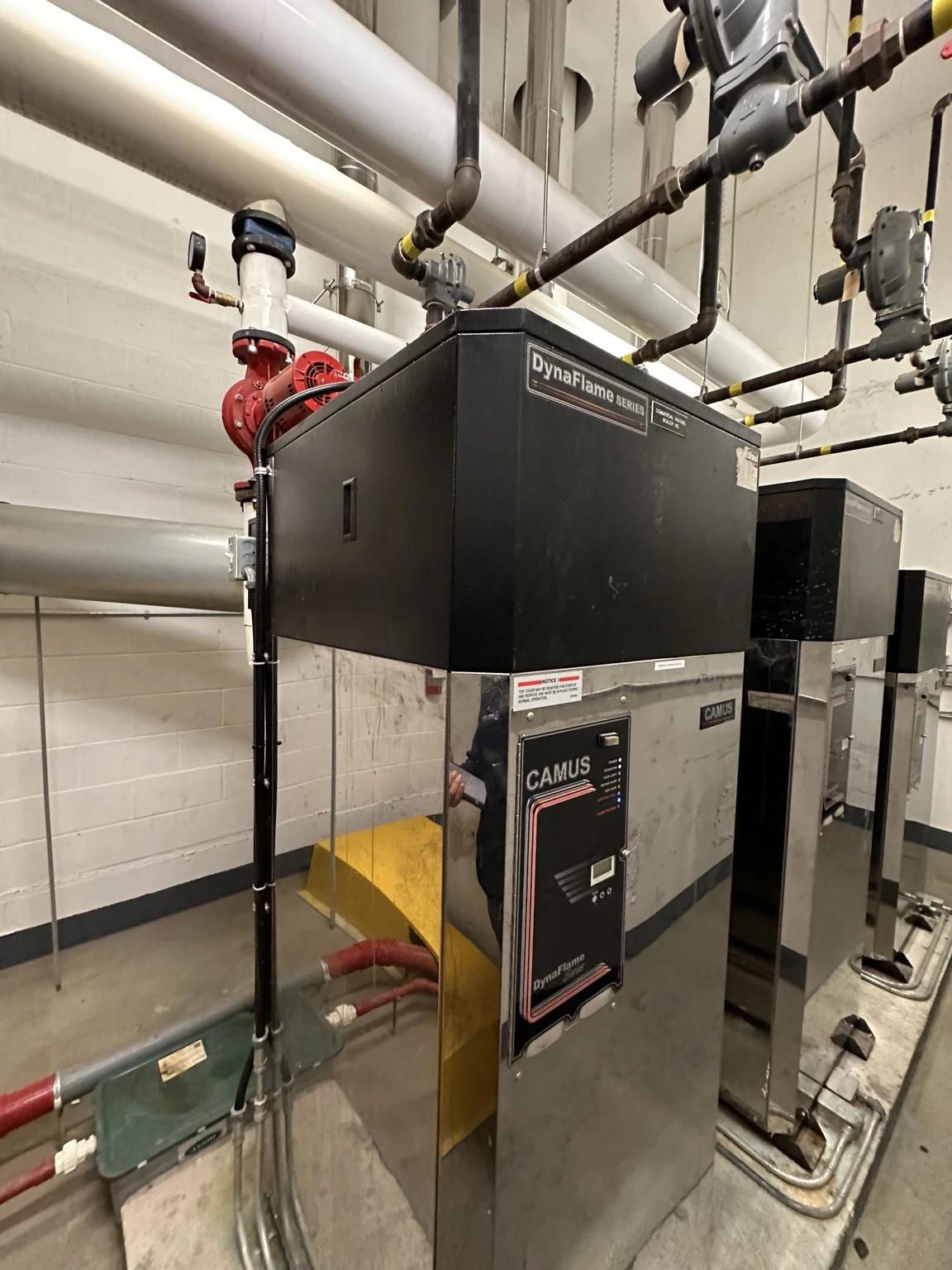
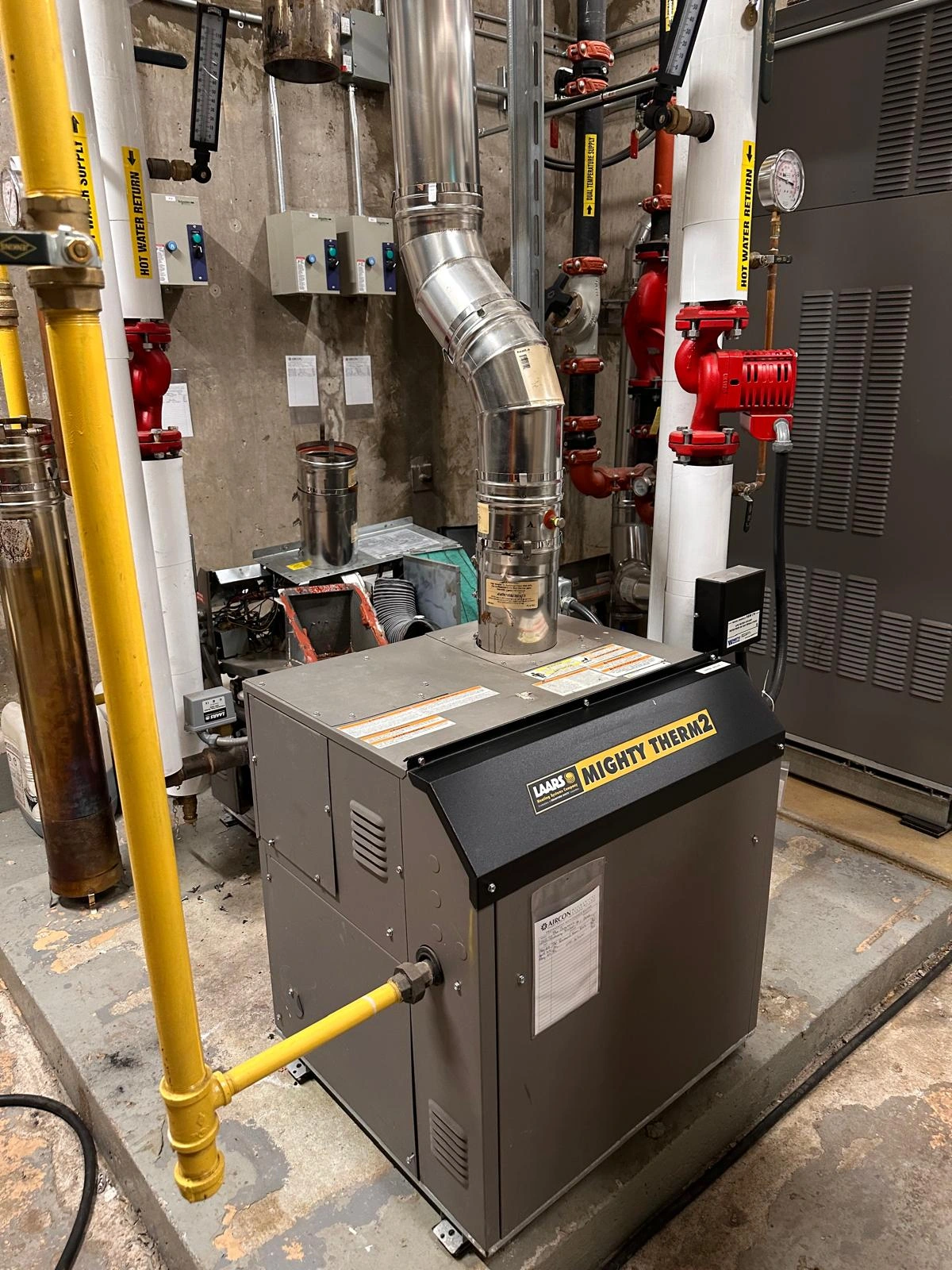
Provide the full installed model for equipment such as Camus, LAARS, RBI, Raypak, Lochinvar, Viessmann, AERCO and Weil-McLain. The equipment condition, parts and site requirements determine the proposed service or replacement scope.
Service planning for condensing and non-condensing boilers, including single-boiler and staged plant arrangements.
Review the heat source together with storage, mixing and recirculation conditions where those components are included in the scope.
Investigate lockouts, short cycling, sensors and lead-lag operation using the installed equipment and fault history.
Plan replacement capacity, venting, condensate disposal, controls, access and the work needed to connect the new plant.
Record the displayed fault and when it occurs. Repeated lockouts need investigation of the cause rather than repeated resetting.
Note which zones or fixtures are affected and when demand is highest. The assessment may need to include temperatures, circulation and control response.
Review operating history, demand, setpoints and plant sequencing. A controls issue and a capacity issue call for different solutions.
Identify the leak location or pressure trend. Connected piping, expansion equipment and make-up water conditions can require separate investigation.
A boiler maintenance agreement should name the equipment and distinguish recurring operating checks from annual or seasonal work. Manufacturer-directed cleaning, combustion assessment where applicable, venting review and control checks depend on the boiler type and installation. Service records should identify completed tasks, findings and corrective work that needs approval.
An aging boiler plant should be assessed against its condition, service history and building demand. Replacing equipment can involve venting, gas and electrical connections, condensate drainage, controls and distribution changes. HTS helps define the installation scope and coordinate engineering or specialist input where needed. Management should plan equipment access, shutdowns, temporary-service requirements and commissioning before approving the project.
Frequently Asked Questions
Browse By Topic
Follow the manufacturer instructions, operating duty, service history and building requirements. Recurring mechanical visits and annual or seasonal boiler tasks should be listed separately in the agreement.
Call HTS with the building address, installed equipment and reported fault to confirm the appropriate response and availability. Notify property management about the affected areas.
Review condition, repeat failures, parts availability, operating demand and the full installed cost. An assessment can help set repair priorities and replacement planning.
No. Combustion, heat-exchanger, venting and condensate arrangements differ. Maintenance and replacement planning must follow the installed model and its requirements.
Only when stated. Identify pump maintenance or repairs separately so the equipment, tasks and price are clear. Our pump service page covers circulation and other building pumps.
No Matching Questions
Try another word or clear the filters to see all answers.
We review the fault records and heating or hot-water demand with your operator. We explain the boiler inspection, maintenance or repair scope and coordinate access with management.
We review the boiler models, fault history and heating or hot-water complaints with your operator. We explain the diagnostic visit, access needs and any service interruption to plan for.