Before approving a fan coil retrofit, ask one question: can this unit be safely isolated from the building’s water system?
A valve can look intact and still fail to shut off properly. If suite valves or riser valves no longer hold, a straightforward replacement can become a building coordination project. Home Trade Standards recommends assessing original valves and planning their replacement before they pass 30 years of service, with earlier action where condition or operation warrants it.
Thirty years is an HTS planning recommendation, not a manufacturer expiry date or a guarantee that a younger valve is sound. Leakage, corrosion, operation, service history and the building’s isolation options all matter.
What a valve assessment should establish
A pre-retrofit survey should identify the supply and return shutoffs, the temperature-control valve, and any balancing devices or strainers. Their functions are different; a thermostat-controlled valve should not automatically be treated as the service isolation point.
- External condition: visible leakage, corrosion, damaged handles or deteriorated connections.
- Operation and isolation: whether the relevant valves can be operated and provide the isolation required for the proposed work.
- History and age: original versus replaced components, prior leaks and previous shutdown difficulties.
- Building backup: which riser or main isolation points are available if the suite valves cannot be relied on.
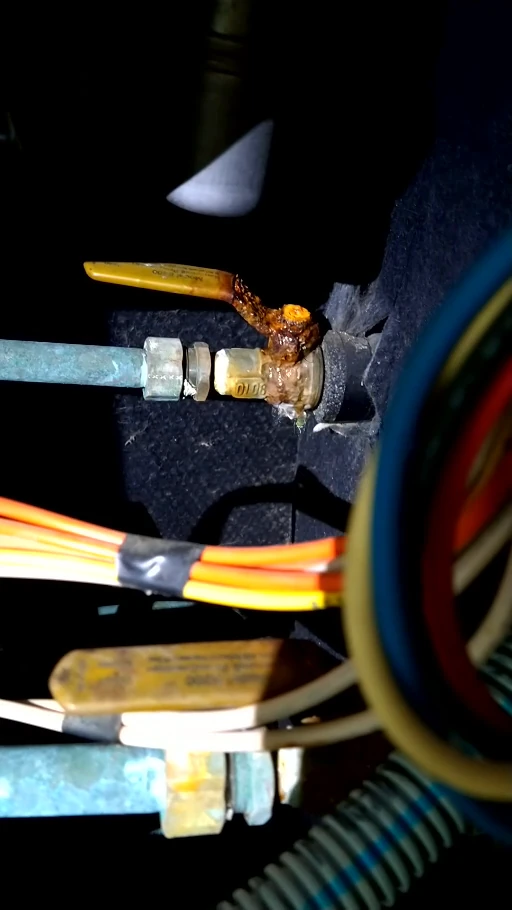
A valve that passes water internally when closed may provide inadequate isolation even without an external drip. The contractor must distinguish visual findings from verified function. Residents should leave valve testing and pipe disconnection to the service team.
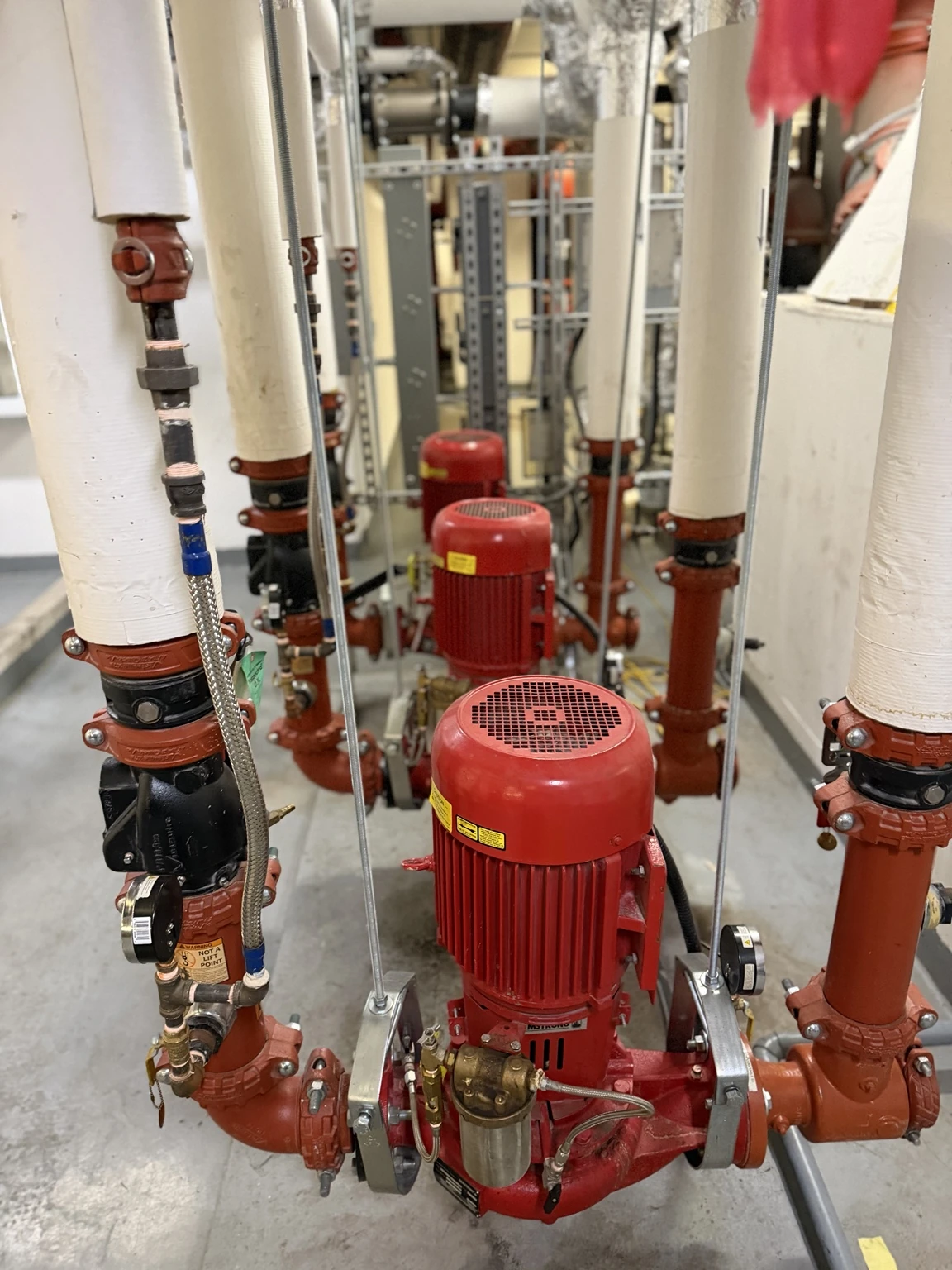
Building pumps and pipework illustrate the coordination involved. The photograph does not establish that these pumps are shut down.
A pump stop is not pressure isolation
Stopping a circulation pump can reduce or stop forced circulation, but the piping can remain full and under static pressure. It does not make a connection safe to open. The mechanical contractor must establish the appropriate isolation and draining arrangement for the work.
Some buildings cannot isolate a single riser because the relevant valves are inaccessible, ineffective or absent. A wider shutdown and drain-down may be necessary. Management also needs to consider resident notices, access, heating or cooling interruptions, and the time needed to refill, purge air and verify operation.
Where specialist pipe freezing may fit
Where conventional isolation is impractical, a qualified contractor may assess a temporary frozen plug as one possible way to isolate suitable piping. It is not a guaranteed alternative to a shutdown.
- Flow: the section to be frozen needs suitable no-flow conditions. Coordinating a pump shutdown may still be necessary.
- Pipe and fluid: material, diameter, water temperature and additives affect feasibility. Glycol can make a proposed freezing method unsuitable.
- Access and protection: there must be room for the equipment, a verified isolation method and a contingency if conditions change.
RIDGID’s SuperFreeze guidance requires assessment of fluid, pipe material, temperature and flow before use. The selected equipment’s instructions and the actual building conditions govern the method.
If local valves do not hold and freezing is unsuitable, the proposal should identify the wider shutdown or enabling work required. Do not base the schedule on an assumed isolation option.
A replacement valve must be suitable for the system and accessible after the cabinet and finishes are reinstated. Review the opening, handle movement, connection clearances and space to inspect joints. A valve hidden behind a finished wall creates another access problem later.
- Record which valves and connections will be retained or replaced.
- Confirm supply and return isolation appropriate to the installed system.
- Identify any access-panel, drywall or cabinetry work and who restores it.
- Preserve the required balancing and control functions when changing the piping arrangement.
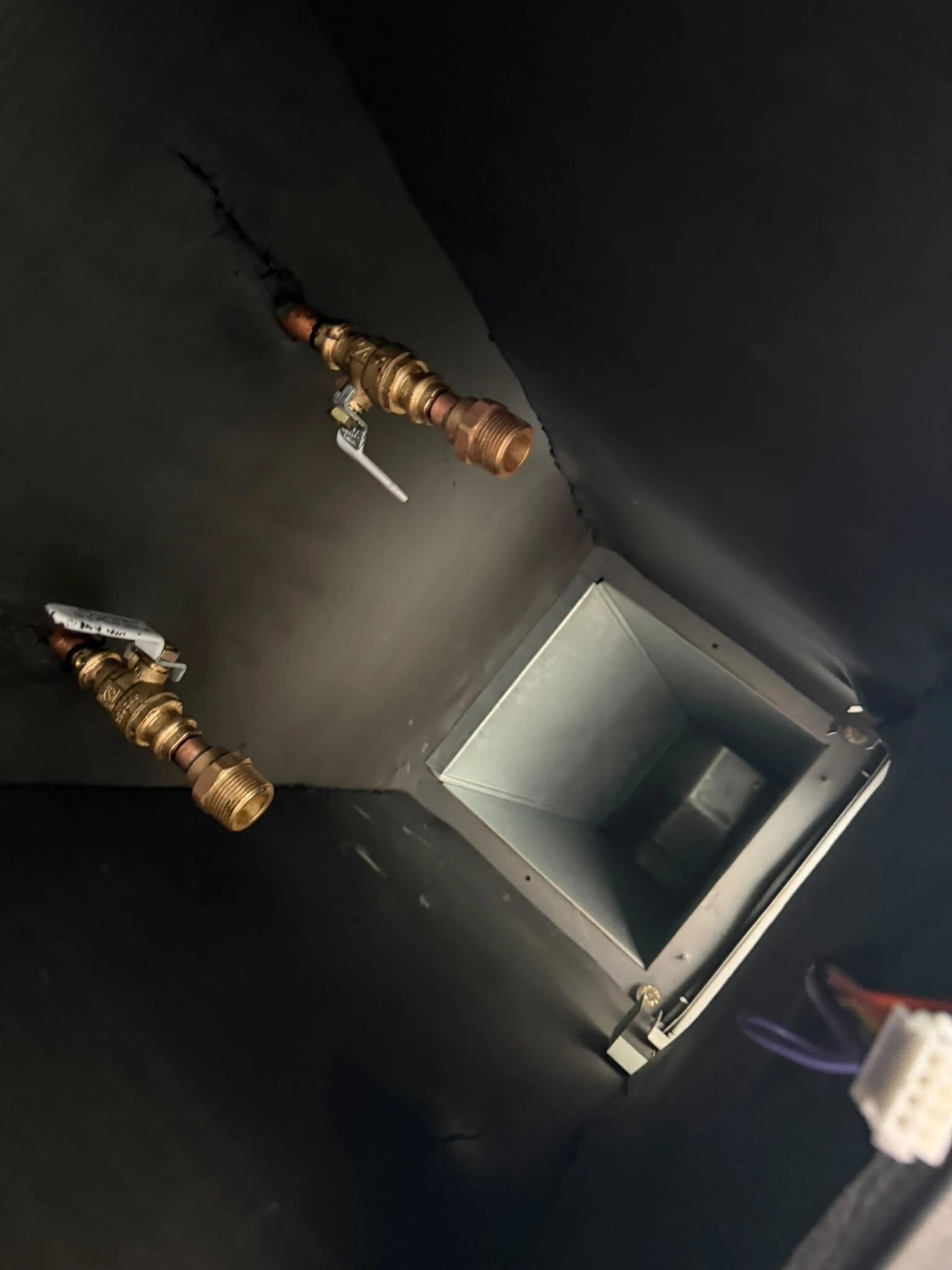
The valve-access photo shows two lever-operated valves and connection points. It is an illustration of access, not a matched before-and-after record for the corroded valve shown earlier.
Your replacement plan should assess the existing shutoffs alongside the fan coil, hoses, coil connections, drain pan, controls and drainage. Installing new equipment while leaving unreliable isolation valves behind can preserve the very problem that makes future service difficult.
A valve program can come before the fan coil program
Where the existing fan coil remains serviceable, a planned valve replacement project may replace the in-suite shutoffs, address specified drain or dump valves, and reconnect the existing fan coil. The objective is to establish dependable service isolation before later equipment work. Each proposal should identify the actual components and any additional piping work.
Use a pilot to confirm the scope
For a building program, assess representative suites and use a pilot installation where appropriate. Confirm cabinet dimensions, connection locations, isolation, controls, access and restoration. Record exceptions before repeating the work across the building; one successful suite does not prove every layout is identical.
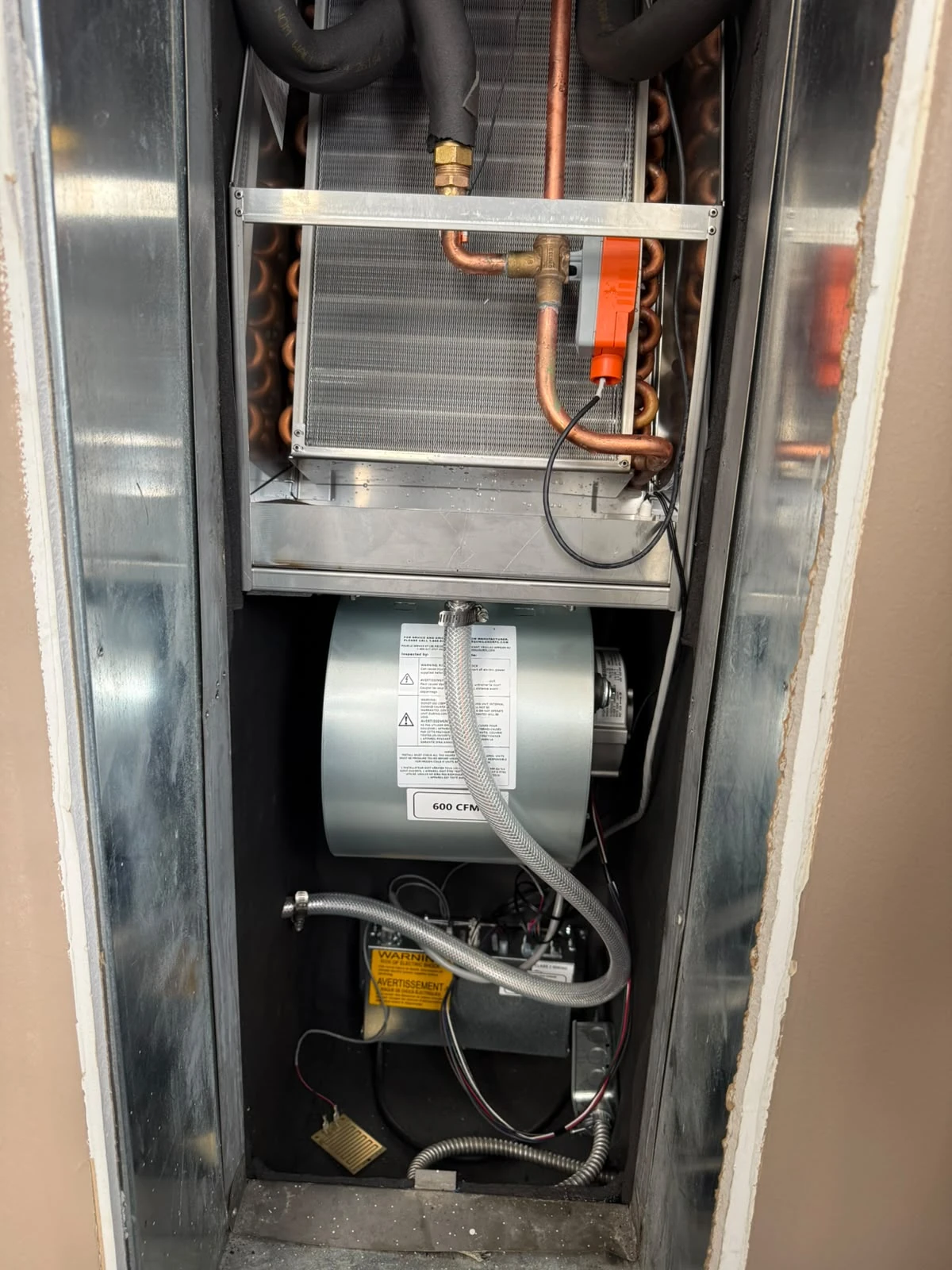
The new fan coil shown here illustrates the equipment and connections assessed during retrofit planning. Its visible control actuator has a different function from the separate manual shutoff valves. The final inspection and testing requirements belong in the project scope.
Compare the work behind each quotation, including the conditions that could change the schedule or price.
| Scope item | What to confirm |
|---|---|
| Valves & connections | Types, quantities, ratings, retained components and proposed piping arrangement. |
| Isolation method | Verified local or riser isolation, shutdown extent, and whether specialist freezing is feasible and included. |
| Access & scheduling | Resident notices, suite entry, security coordination, shutdown window and inaccessible-suite plan. |
| Restoration | Drain-down, refill, air purging, insulation, access panels and responsibility for finishes. |
| Testing | Leak checks, valve function, drainage and controls, plus relevant system operating checks. |
| Closeout | Equipment and valve records, photographs, verification results and outstanding items. |
Separate the installation time from the time needed to restore building operation. Confirm any allowance or change process for hidden conditions before work begins.
06 · Common questions
Before You Approve the Work.
Use these answers to prepare for a suite assessment or a building-wide valve program.
Should fan coil valves be replaced before they are 30 years old?
HTS recommends assessing original valves and planning replacement before they pass 30 years, with earlier action for defects or unreliable operation. This is a planning recommendation, not a universal service-life limit. Condition, history and available building isolation determine the scope.
Can valve replacement avoid a whole-building shutdown?
Sometimes. Suitable suite or riser isolation may limit the affected area. Where those valves do not hold, specialist freezing may be assessed, or a wider shutdown and drain-down may be required. The contractor must verify the options.
Does turning off the pump make the pipes safe to open?
No. Pump shutdown does not remove static water pressure or empty the system. The work still requires a verified isolation and pressure-control plan.
Can every fan coil pipe be frozen?
No. Suitability depends on the pipe, fluid, temperature, flow, access and selected freezing equipment. Some systems, including certain glycol applications, are unsuitable for the proposed method.
Can the valves be replaced while keeping the existing fan coil?
Yes, where the equipment and installation are suitable. The quotation should identify the new valves, reconnection work, isolation method, testing and any exclusions.
Is the motorized control valve also the service shutoff?
Do not assume so. The control valve regulates water flow for temperature control. Confirm the separate isolation arrangement required for safe service.
Technical reference: RIDGID SuperFreeze operating manual. Equipment-specific instructions govern specialist freezing work.