Magic-Pak Problems in Condos
Ice, leaks, venting and replacement.
Know what to check—and what your technician needs to confirm.
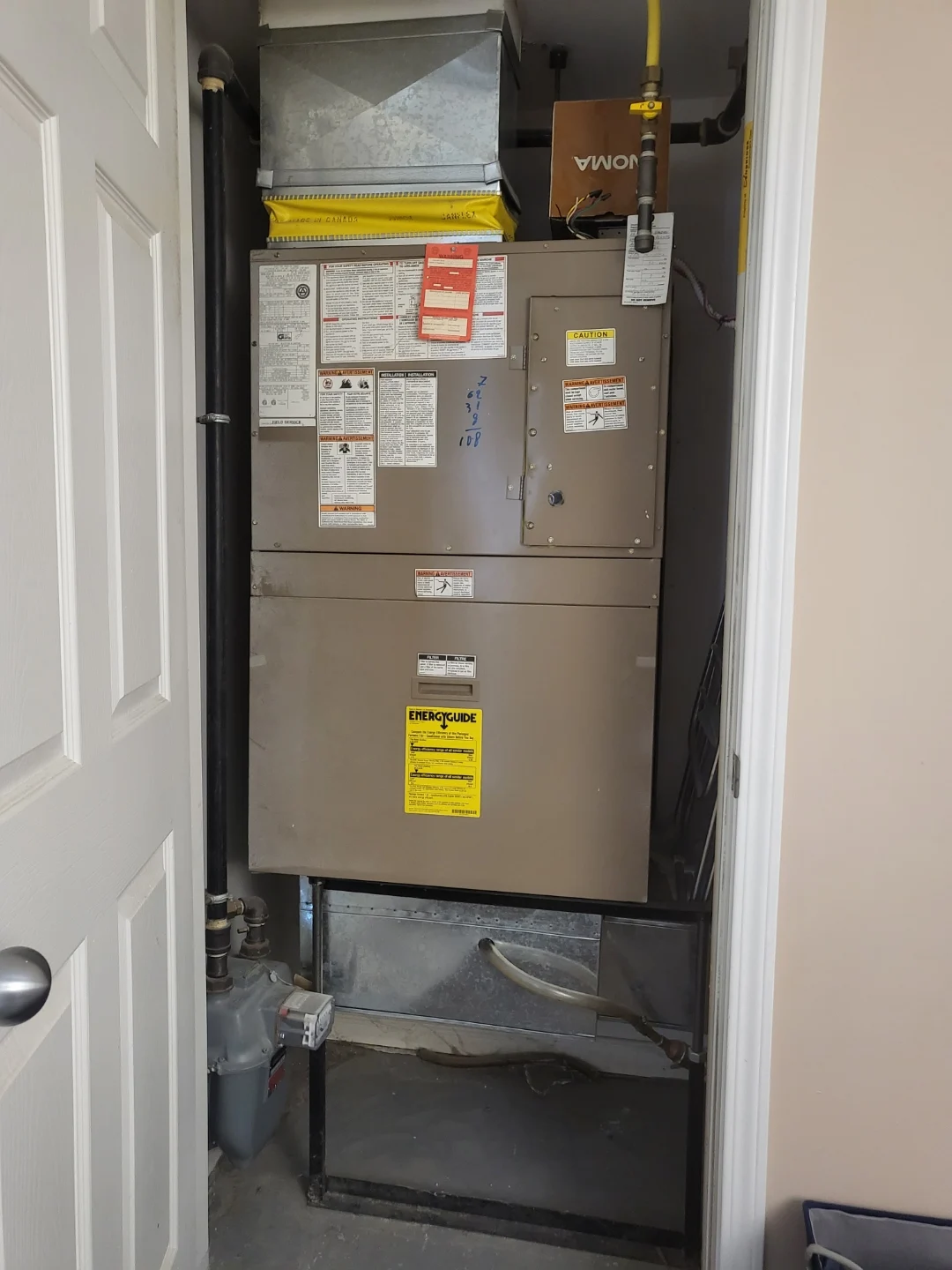
A Magic-Pak that is icing up, cooling poorly or struggling to heat needs a diagnosis before a replacement decision. Airflow, refrigeration, controls and—on gas-heated models—combustion and venting all matter. A clear model-label photo and a wider installation photo are the best starting point.
What is a Magic-Pak?
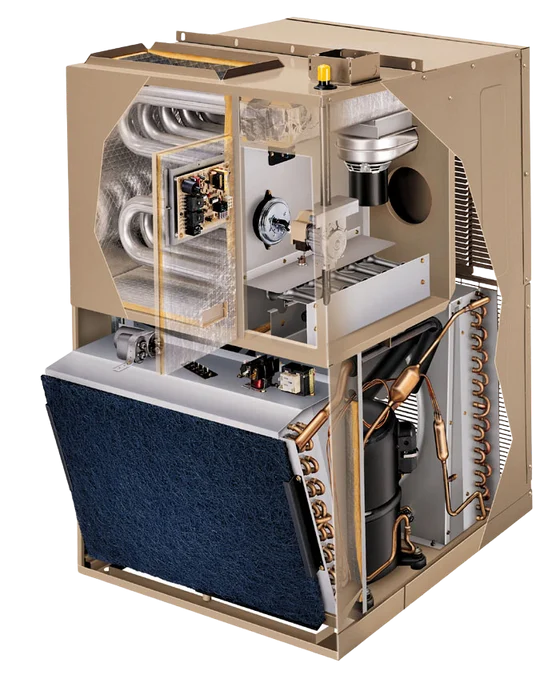
Magic-Pak is a family of packaged heating and cooling systems used in apartments and condominiums. Equipment is typically installed in a dedicated space connected to the exterior wall, with conditioned air distributed through ductwork.
The heating method depends on the model. For example, the HWC family combines gas heating with electric cooling. Do not assume every Magic-Pak is a heat pump, or use water-source heat-pump replacement advice without identifying the equipment first.
Why the model label matters
The full model and serial number help identify the correct literature, parts and replacement options. Capacity alone is not enough. Voltage, heating type, cabinet configuration and the existing installation also need to be checked.
Photograph the original label straight on, with enough light to read it. Include a second image of the full unit. Do not remove a panel that exposes wiring, burners or moving parts just to obtain a photograph; ask the technician to record an inaccessible label.
Why is my Magic-Pak icing up?
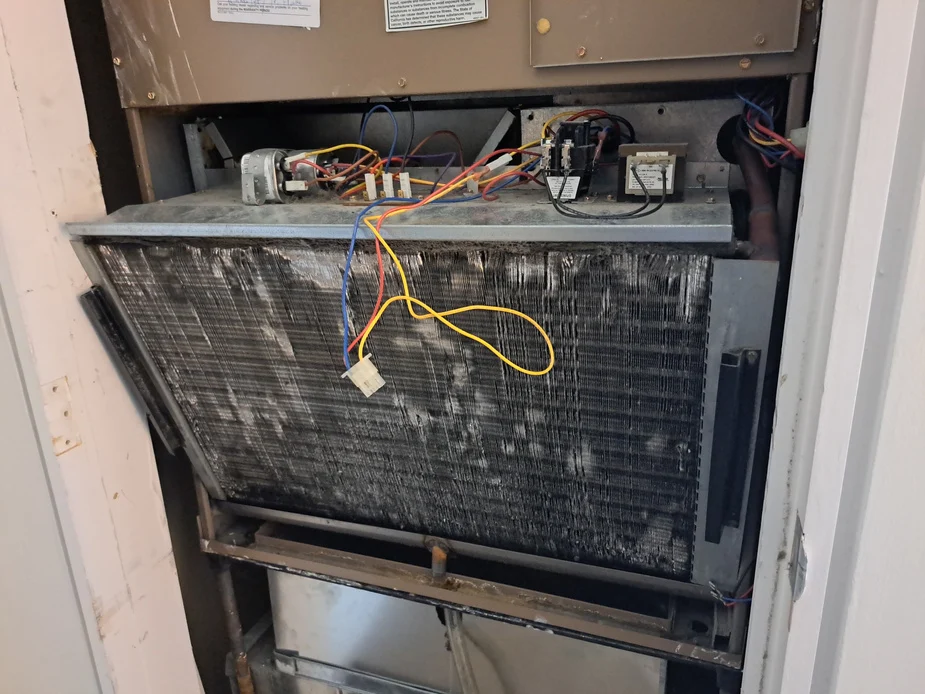
Ice on the cooling coil can result from restricted airflow or a refrigeration problem. A clogged filter, dirty coil or blower problem can reduce heat transfer. Low refrigerant is another possible cause. The presence of ice does not, by itself, identify which fault is responsible.
If the indoor cooling coil is frozen, stop cooling and arrange service. Do not chip ice off the coil or keep restarting the system. Thawing may produce water, so report any leakage and keep clear of wet electrical components.
| What you notice | What needs checking |
|---|---|
| Ice with weak airflow | Filter condition, coil cleanliness, return-air restrictions and blower operation. |
| Poor cooling or repeated icing | Airflow and controls, followed by refrigerant-system testing where indicated. |
| Water after the ice melts | Drain pan and condensate drainage, as well as the original cause of freezing. |
Does it just need more refrigerant?
A suspected refrigerant leak needs to be investigated. Ask what testing supports the diagnosis, where the leak is located, and whether the affected part can be repaired or replaced. Recharging without addressing a confirmed leak does not resolve its cause.
Photographs can help explain symptoms, but operating measurements and inspection are needed to distinguish airflow problems from refrigerant faults. The technician should document the findings and the recommended scope.
Why annual heat-exchanger checks and combustion analysis matter
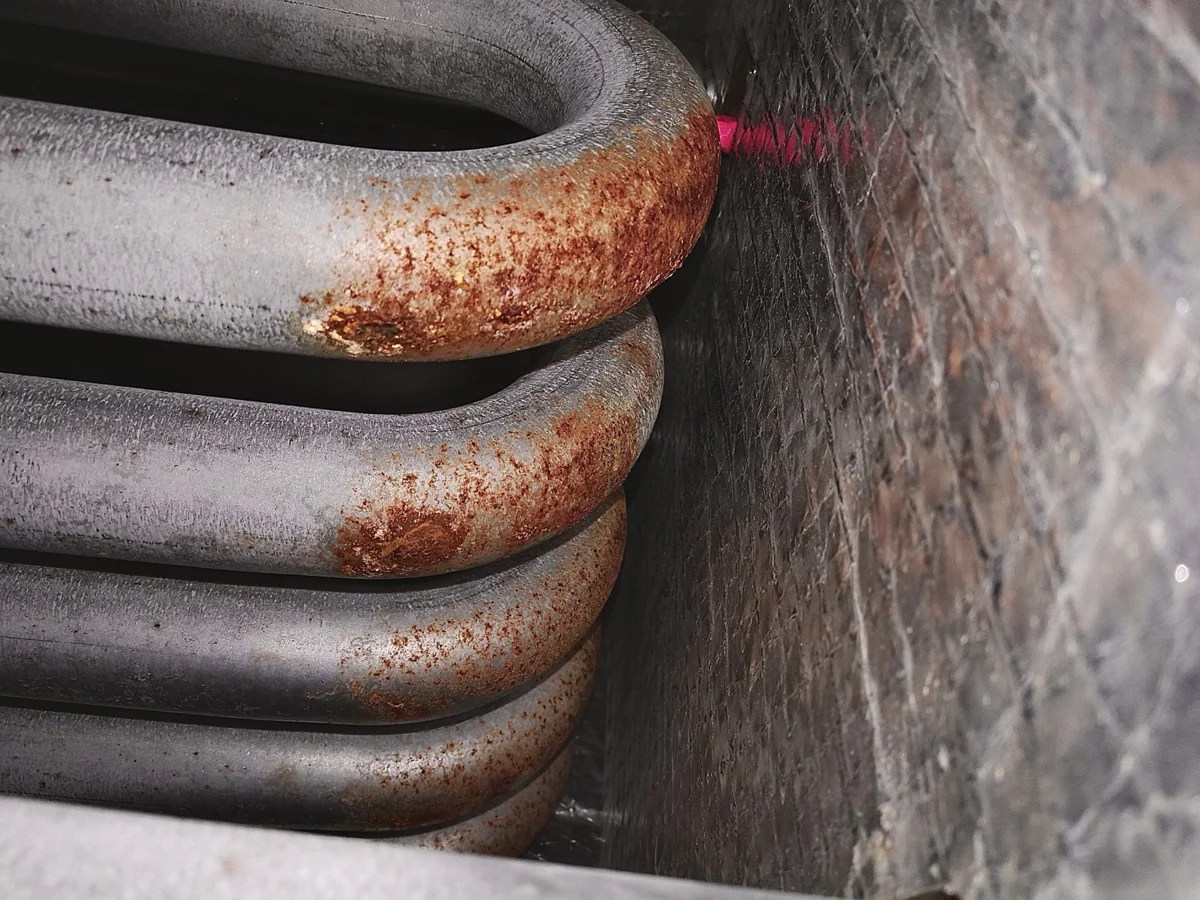
The gas heat exchanger transfers heat from combustion to the air circulated through your condo while keeping combustion gases separate from that air. Corrosion, cracks or other deterioration require professional assessment because a damaged heat exchanger can create a pathway for combustion gases, including carbon monoxide (CO), to enter the circulated air.
Have the gas-heated Magic-Pak inspected and serviced every year by a qualified gas technician through a TSSA-registered contractor. HTS recommends annual combustion analysis with recorded CO readings in parts per million (ppm), alongside inspection of the heat exchanger, burners, combustion-air supply and venting. A filter change alone does not cover these heating-safety checks.
What should the technician check and record?
- Heat-exchanger condition: inspect accessible surfaces for corrosion, cracks, soot and deterioration, following the model-specific procedure. Record any inaccessible areas or need for further investigation.
- Combustion analysis: use a properly maintained and calibrated analyzer, following the appliance and instrument instructions. Record flue-gas CO in ppm, oxygen and flue temperature, together with the sampling location and operating conditions. Identify whether the reported CO value is measured or air-free corrected.
- Ambient CO: check and record CO in the surrounding indoor air separately. A flue-gas CO reading is not a room-air reading; the two must not be interpreted against the same criteria.
- Venting and operation: assess combustion-air and exhaust paths, burner operation and relevant safety controls. Document findings, corrective work and verification after service.
The technician must interpret results against the exact equipment instructions and applicable requirements. A low CO reading at one point in time does not prove that a heat exchanger is crack-free. Combustion analysis complements physical inspection; neither a photograph nor a single ppm value certifies the entire system as safe.
Keep the service report so readings and equipment condition can be compared at the next annual visit. Working CO alarms remain essential and do not replace professional maintenance. Suspected unsafe conditions require prompt assessment rather than waiting for the next scheduled service.
Why the louver and venting matter
The exterior louver is part of the equipment’s airflow arrangement. On gas-heated units, the combustion-air and flue arrangement also require attention. A replacement cannot be selected solely because its cabinet appears to fit the closet.
The correct louver, wall sleeve, separation of air paths and vent configuration depend on the model and its installation instructions. Avoid covering the grille or adding decorative screens. Exterior work may require property-management coordination.
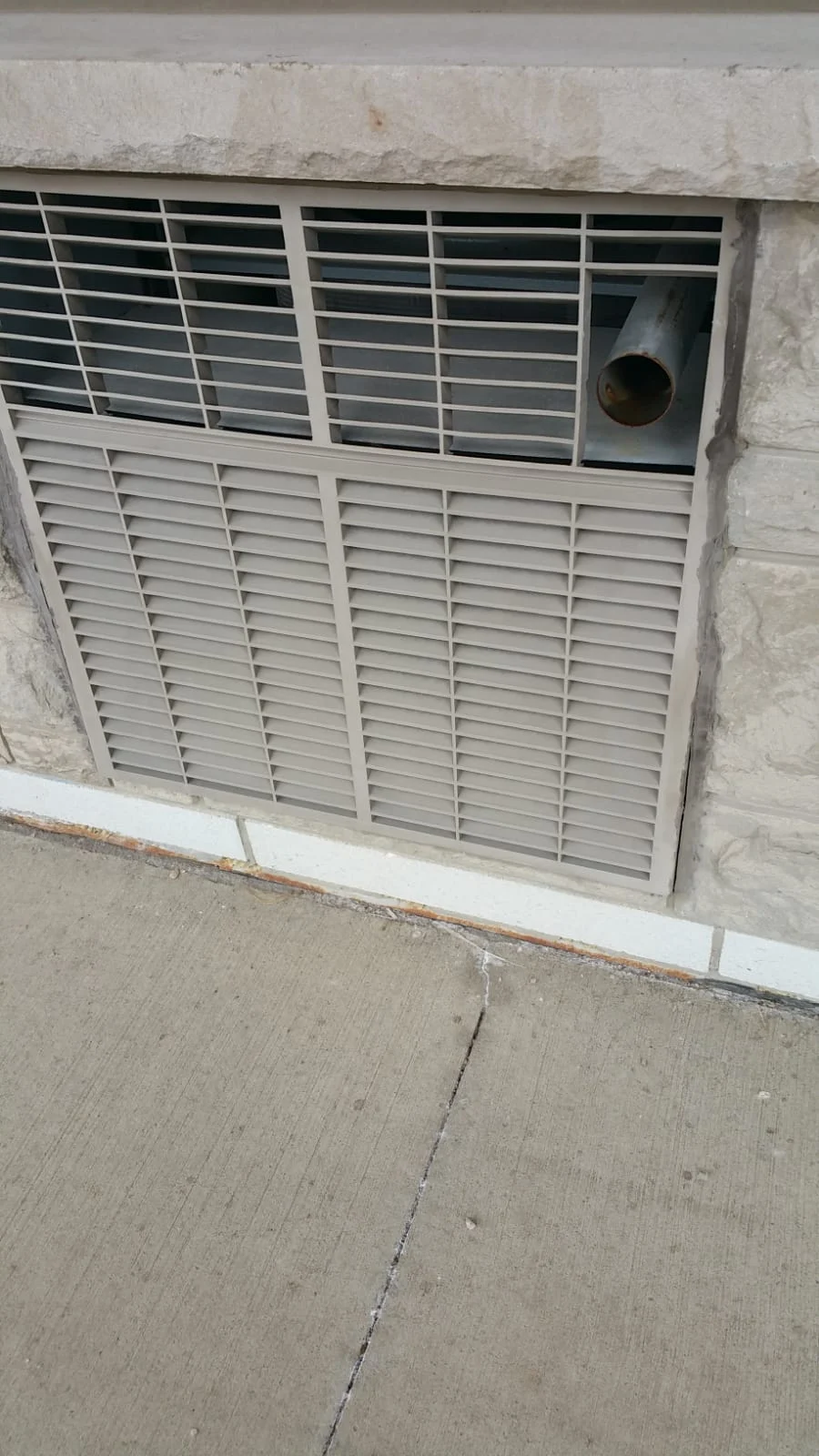
During an assessment, ask whether the existing wall opening, sleeve and louver can be retained, and what changes the proposed replacement requires. Any necessary exterior work and restoration should appear in the quotation.
What should Magic-Pak maintenance include?
HTS offers spring and fall maintenance for individual condo owners and building programs. The scope should reflect the model, its condition and manufacturer instructions. Maintenance reduces avoidable problems but does not guarantee that a component will not fail.
| Before heating season | Before cooling season |
|---|---|
| Check startup, thermostat response and unusual noise. | Inspect filters, indoor airflow and coil condition. |
| Inspect the filter and confirm the correct replacement specification. | Assess condenser cleanliness and remove accessible debris using suitable methods. |
| For gas models, complete annual heat-exchanger and venting checks with combustion analysis; record flue-gas CO in ppm and ambient CO separately. | Check the drain pan and condensate drainage. |
| Record concerns with the heat exchanger, burners, ignition components or controls for further assessment. | Confirm operation after service and document unresolved faults. |
There is no single filter size or cleaning method for every Magic-Pak. Cooling-chassis removal and chemical cleaning should be performed only when appropriate to the unit and service procedure. An accessible visual inspection also has limits; it is not a guarantee that every hidden part of a heat exchanger is sound.
For property managers
A coordinated program can record equipment models, recurring faults and access restrictions across suites. Ask for findings that separate completed maintenance from repairs needing approval, with photos where useful. Confirm access arrangements and resident notices before the visit.
Repair, shop refurbishment or replacement?
The right choice depends on the diagnosed fault, overall condition, parts availability and installation requirements. A serviceable control fault and a badly deteriorated assembly are different decisions.
| Option | When to consider it | What the scope should explain |
|---|---|---|
| In-suite repair | A specific fault can be corrected with suitable access and parts. | Diagnosis, parts, labour and operational checks. |
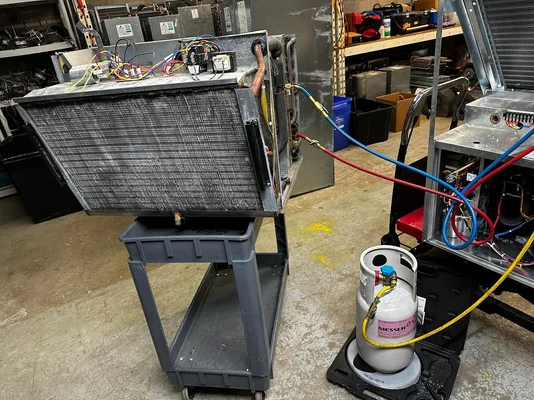
| Shop repair or refurbishment | A removable assembly needs workshop access or more extensive work. | What is removed, what is repaired, testing, transport, expected interruption and warranty. |
| Compatible chassis replacement | An approved replacement assembly is available for the existing cabinet. | Exact compatibility and which components are retained. |
| Complete unit replacement | Overall condition or compatibility makes a full replacement appropriate. | Equipment, connections, sleeve/louver/vent work, controls, startup and restoration responsibilities. |
Can a Napoleon Condo Pack replace a Magic-Pak?
A Napoleon Condo Pack may be an option for a particular installation, but it should not be described as a universal drop-in replacement. Confirm the proposed model, cabinet and sleeve fit, airflow, heating and cooling capacity, electrical supply, gas/venting requirements where applicable, drainage and controls before ordering.
Compare written scopes, not just equipment names. A quotation should identify what will remain in place, what must change and who handles any wall or finish restoration. The quotation should be based on the inspected Magic-Pak installation.
Send the details that help us assess your unit
- Original model-label photo: the complete model and serial number, if safely accessible.
- Full installation photo: show the closet, duct connections and available clearance.
- Exterior louver photo: only if it can be taken safely from an accessible location.
- Symptoms: no heat, weak cooling, ice, water, noise or repeated shutdowns—and when they occur.
- Service history: previous diagnoses or repairs, if available.
- Building requirements: management contact and any known access or exterior-work restrictions, supplied privately with the enquiry.
HTS can then explain the next assessment step and prepare a quotation based on the verified equipment and site conditions. Appointment requests are confirmed by the team; they are not an immediate time commitment.
Common Magic-Pak questions
Does ice always mean there is a refrigerant leak?
No. Airflow restrictions and refrigeration faults can both cause indoor cooling-coil icing. Inspection and testing are needed to determine the cause.
Can only the cooling section be replaced?
Some Magic-Pak models have a replaceable cooling chassis. The exact existing cabinet, replacement assembly and manufacturer compatibility requirements must be checked.
Can I reuse the exterior louver?
Possibly, but only after checking the proposed equipment’s requirements and the existing installation. Do not assume a louver is suitable because the opening is the same size.
How often should I arrange service?
HTS offers spring and fall service programs. The final schedule and tasks should follow the equipment’s instructions, operating conditions and service history.
How much does replacement cost?
A useful price requires the model and installation scope. Cabinet fit, access, controls, connections and exterior work can change the total. Request a written quotation with inclusions and exclusions.
Should CO readings be checked every year?
For a gas-heated Magic-Pak, HTS recommends annual combustion analysis and documented CO readings alongside heat-exchanger and venting inspection. Flue-gas and ambient CO measurements serve different purposes; neither replaces the other or a physical inspection.
Technical references
Service-program descriptions and extracted images: HTS Magic Pak Brochure, supplied for this article. Model-dependent guidance checked against:
- MagicPak HWC gas-heating/electric-cooling product information
- MagicPak model-specific installation instructions
- MagicPak V-Series application guide: louvers, filters and venting
- Carrier: general cooling-coil freezing causes
- TSSA: annual fuel-burning appliance inspections and CO alarms
- Testo: combustion measurement tasks
- Testo: ambient CO measurement during heating-system service