In This Guide
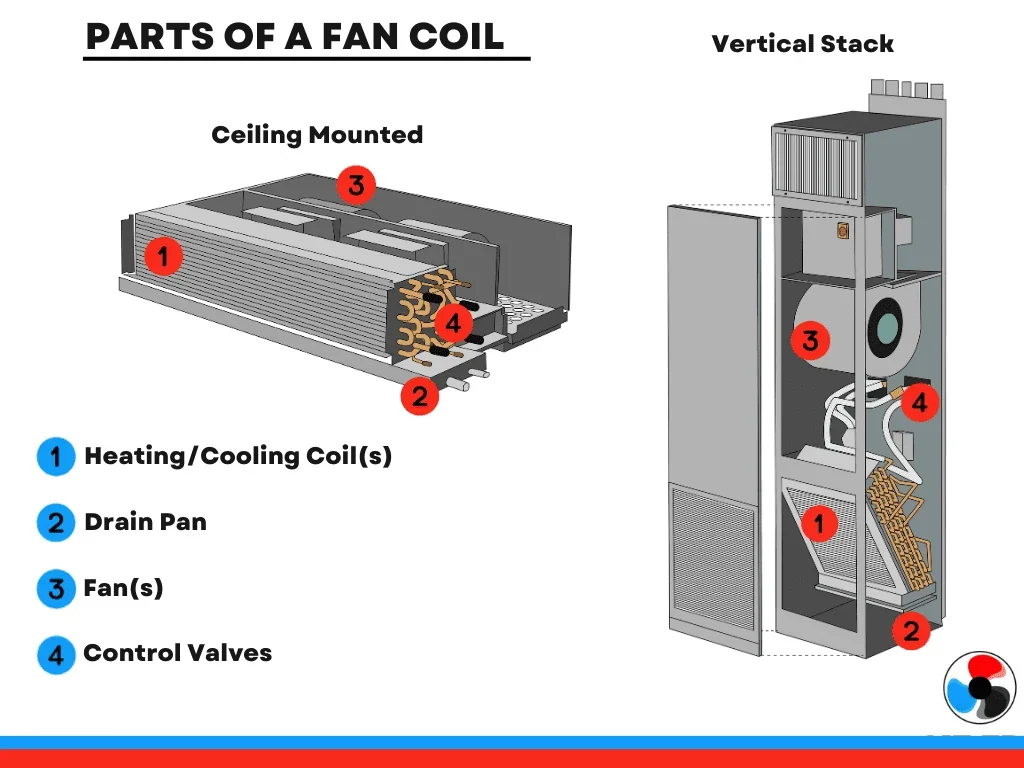
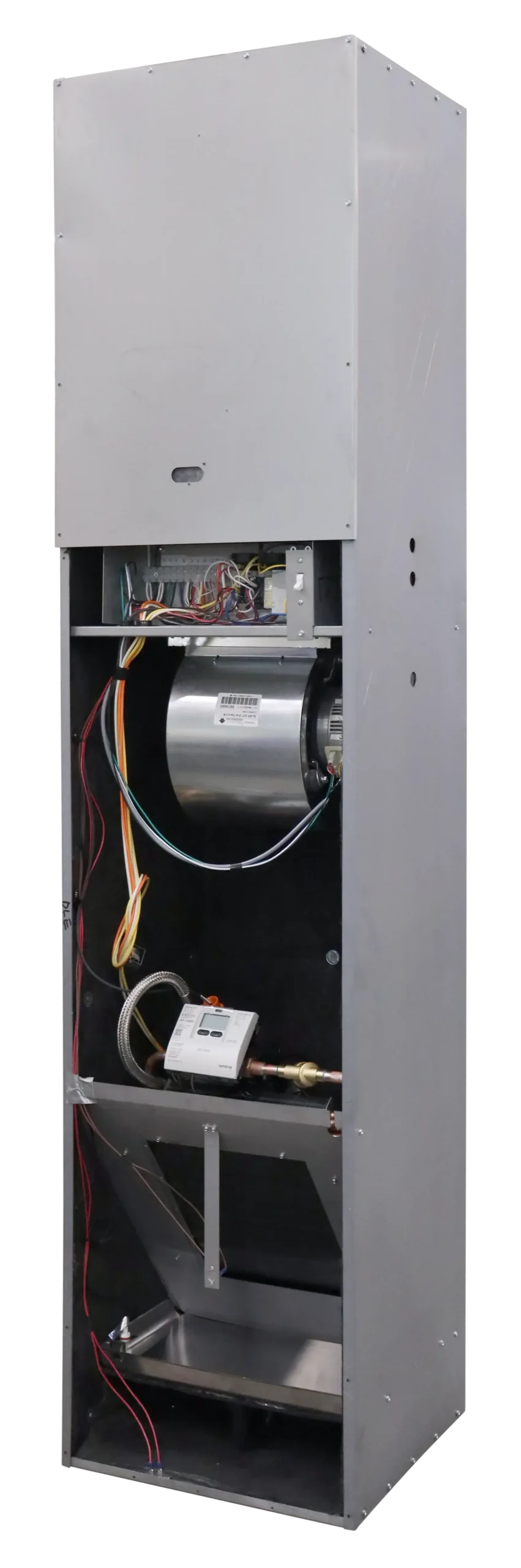
Condo fan coil units are hydronic systems that rely on the building’s mechanical infrastructure to provide chilled & hot water for the purpose of heating & air conditioning in condos. Condo Fan Coil systems are dependent on the following mechanical systems:
- Chiller, which chills the water
- Boiler, for heating the water
- Pump, to move the water through the system
- Water supply & return piping
Low-rise & high-rise condominiums can reduce common element energy costs usage by choosing the right chiller and boiler for the building. These systems benefit from economies of scale by delivering heat/cooling to the entire building. Larger chillers can achieve efficiencies of 16-21 EER, the ratio of cooling delivered per unit of energy used. Larger natural gas boilers can achieve efficiencies of over 90%.
Fan coils can suit buildings with central hot- and chilled-water systems. Compare comfort, sound, controls, maintenance access and whole-building energy use when evaluating the design.
- Comfort: Temperature, Humidity, & Noise
- Service & Replacement: cost, simplicity, & Serviceability
- Energy Saving: Efficiency, Reliability, & Complexity
Quiet Comfort: Using Fan Coils To Maximize Energy Efficiency, Flexibility, And Serviceability For Condo HVAC Systems
The simple design lends itself to many different configurations for any application. Fan coils can fit above the ceiling, under a window, or in a small closet. This flexibility allows architects to choose a configuration to meet the needs of their project.
The fan coil provides building owners with options, and the various configurations enable engineers and developers to choose the best building systems for the project.
The Benefits Of 2-Pipe Vs. 4-Pipe Fan Coil Systems For Condos
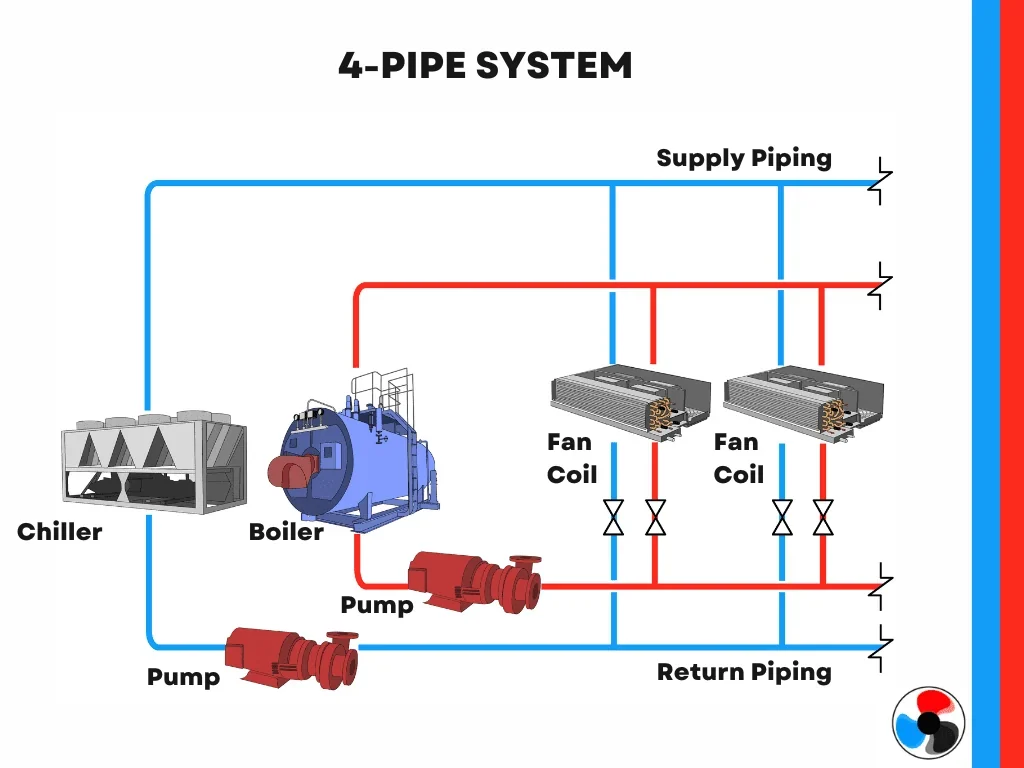
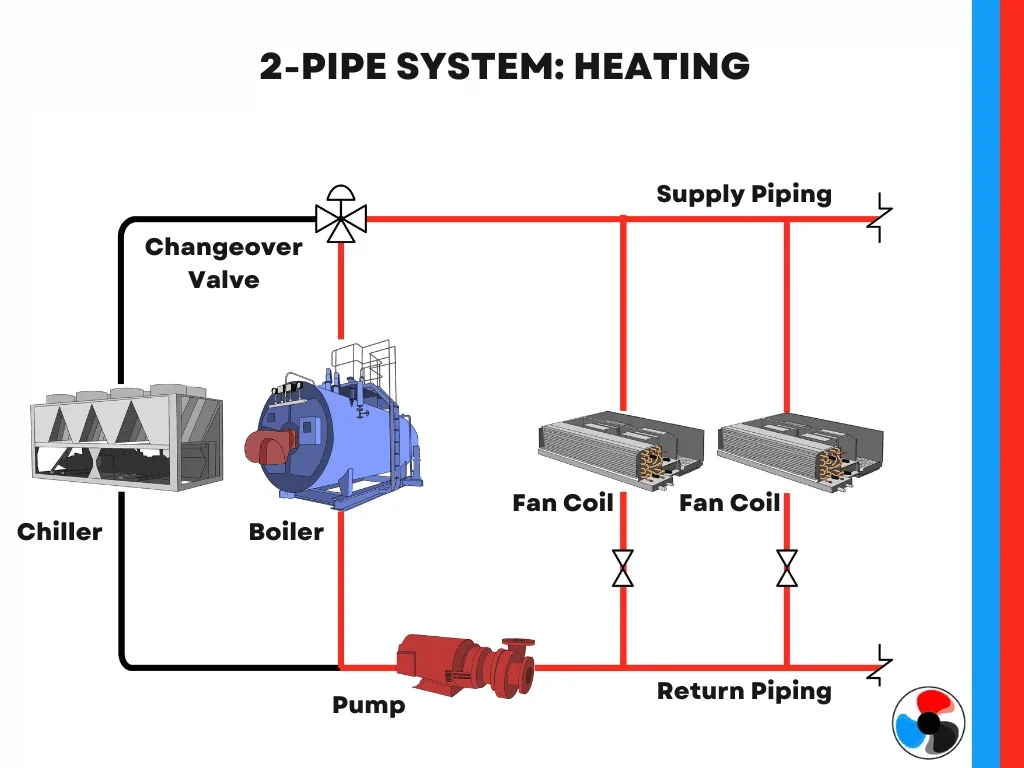
A two-pipe fan coil uses one water supply and one return for seasonal heating or cooling. The building changes the supplied water mode, so a thermostat cannot call for unavailable chilled or hot water. Four-pipe systems have separate heating and cooling circuits, subject to plant operation and controls.
When the fan coils have a separate hydronic coil, the building will have a separate water piping system for chilled or hot water distribution. This is called a 4-pipe system, which is more expensive for the building because it requires additional supply and return pipes for heating or cooling all year round. In other words, 4-pipe fan coil units enable homeowners to use heat or cool simultaneously.
Quiet Efficiency: The Silent HVAC Solution For Condominiums
A hydronic fan coil does not need a refrigerant compressor in the suite. Sound can still come from the blower, airflow, water movement, valves or vibration. Installation, maintenance and operating settings affect the noise residents hear.
Engineers select equipment for the space’s heating and cooling loads. Compatible variable-speed fans and modulating controls can help match output to changing demand. The benefit depends on the selected equipment, control sequence and building-water conditions; not every fan coil has these capabilities.
Condo Air Conditioning Alternatives
Alternatives include water-source heat pumps, packaged equipment and split systems. Compressor location and sound vary by design. Compare rated performance and total energy use, including central plant and pumping, rather than assuming one system is always more efficient or less expensive.
Compressor-based systems may use single-stage, staged or variable-capacity operation. The ability to match a partial load depends on the specific model and its controls.
Fan Coil Ease Of Maintenance: Low-Cost Technology Improvements
Fan coil service may involve the blower, coil, valves, controls and drainage. Repair cost and remaining life depend on condition, parts availability and access. Compare the proposed scope with suitable retrofit or replacement options instead of relying on a fixed lifespan.
When replacing an older fan coil system, it is easy to implement the latest upgrade to the latest technology. A new fan, motor, valve, and thermostat result in a system achieving the highest comfort and efficiency.
Home Trade Standards specializes in servicing and replacing fan coil systems and is an expert in repairing and maintaining these systems.
A fan coil can be a practical choice when it matches the building infrastructure and suite requirements. A sound decision considers equipment fit, maintenance access, controls, expected noise and the central heating and cooling systems.