Find Your Next Step.

Popular places to start

Replacement & Planning

Ageing Fan Coil Units: Problems, Costs, And Solutions

Request ServiceCall Now 416-736-7001

Learn how ageing condo fan coils develop problems and compare maintenance, repair and retrofit options based on condition, access and compatibility.

Browse Service FAQs →
On This Page 4 Topics

Age significantly affects the performance of fan coil units, primarily due to wear and tear as well as technological obsolescence. Fan coil units that are over 20 years old often require refurbishments, replacement or retrofitting.

Fan Coil Refurbishment

Replacing and reusing the old fan coil units parts with new, energy-efficient components can extend the life of the existing unit by up to 10+ more years. Fan Coil Refurbishment is a more economical solution to enhance energy efficiency and indoor air quality. This option can help resolve a range of issues, including:

  • Energy Consumption: Older units often consume more power, increasing utility bills. New units are designed to be much more energy-efficient, lowering costs over time.
  • Indoor Air Quality & Allergies: Newer models come equipped with better filtration systems, which can help reduce allergens and improve air quality.
  • Noise Reduction: New fan coils operate more quietly, enhancing tenant comfort.
  • Improved Temperature & Airflow Control: Modern systems provide more consistent and accurate temperature regulation, making indoor environments more comfortable.
  • Reduced Maintenance Costs: With a new unit, maintenance requirements decrease significantly, reducing long-term upkeep costs.

Retrofitting & Replacing The Existing Fan Coil Units:

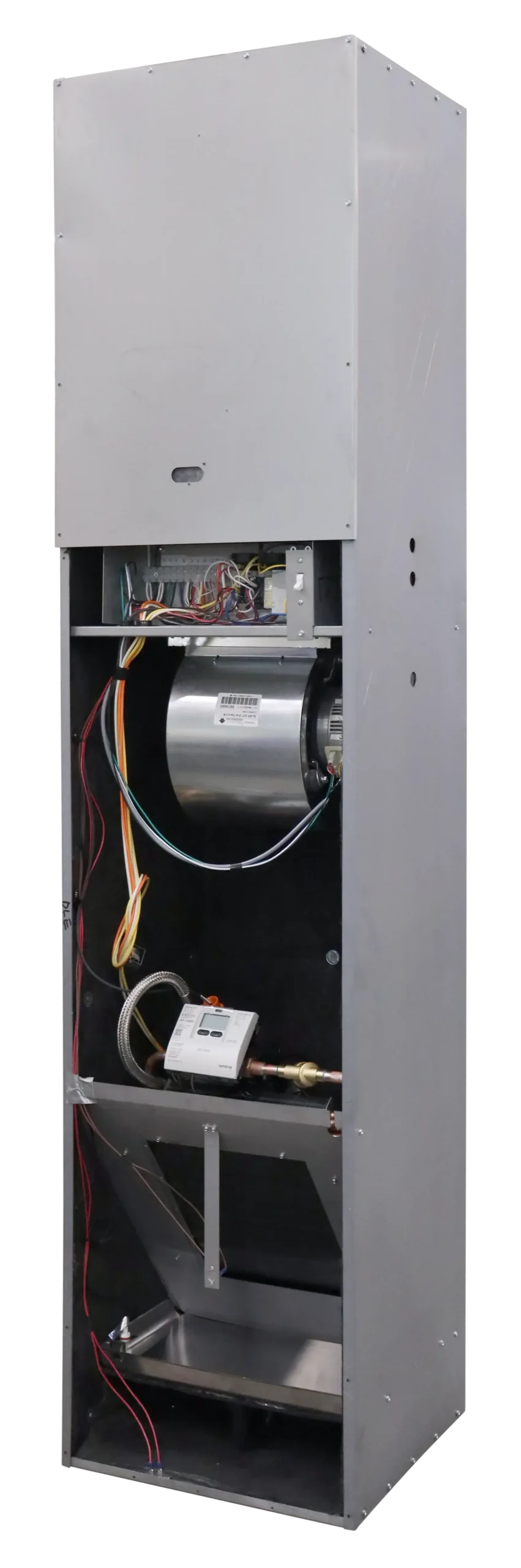
Fan Coil Retrofit involves replacing all mechanical and electrical components of an old fan coil unit with brand-new, high-efficiency technology. This process upgrades the internal components of the fan coil unit, such as motors, coils, drain pans, thermostats, electrical boxes, and low-voltage wiring, with more modern, energy-efficient alternatives. Additionally, the cabinet insulation is completely removed and reinsulated with non-fiberglass insulation. These materials offers better microbial and mold resistance compared to traditional fiberglass insulation.

Fan Coil Removal & Installation:

The entire fan coil retrofit installation process takes about 8 hours from start to finish, ensuring minimal disruption to your building’s daily operations.

A compatible fan coil retrofit may renew worn components while retaining suitable parts of the existing installation. Compare its scope and cost with repair and full replacement after an inspection.

New Fan Coil Units can also integrate smart control systems like WIFI Ecobee or Nest. This feature allows condo owners to control their system remotely while managing energy consumption. Another useful feature is audible water float sensors. This feature normally comes with the new fan coils to alert residents in case of water leaks inside the fan coil unit, preventing costly water damage.

One key advantage of a fan coil retrofit is that the new components are designed to fit directly into the existing cabinet. Normally the goal is to make the installation process as seamless as possible by minimizing damage to the drywall.

How Home Trade Standards Can Help:

Home Trade Standards specializes in assisting property managers and condo corporations with the retrofitting process. Contact Home Trade Standards today for expert advice and service to bring your fan coil units up to modern standards.

Home Trade Standards – Your Condo HVAC Specialists in Toronto & the GTA.
Frequently Asked Questions

Your Questions.
Clear Answers.

Explore the questions below. Select a question to open its full answer, or keep several answers open to compare.

What Solutions Exist For Ageing Fan Coils?

Property managers and board members often implement strategies to mitigate the impact of outdated fan coil units. These strategies include reserve fund studies, engineering analysis, contractor recommendation & AGM Town Hall Meetings. There are various fan coil replacement solutions available on the market. It is crucial to bring the right parties in om the table who have experience with dealing such in-suite problems. The goal is to recognize the risks of operating aging fan coil units in the entire building and common element areas. Continuous education and communication among property managers and condo board members are essential to land on timely decisions and ultimately preventing liability issues.

The decline in performance that comes with age is noticeable in several ways:

  • Reduced Efficiency: Older fan coil units have to work harder to maintain performance, leading to increased energy consumption and higher operational costs.
  • Uneven Temperature and Airflow: As efficiency decreases, airflow distribution becomes uneven, and temperature readings become inaccurate. This forces residents to make frequent adjustments to achieve their desired comfort level, further driving up energy consumption.
  • Increased Repair & Maintenance Costs: Aging fan coils typically require more frequent and costly repair & maintenance to keep them running.
  • Risk of Flooding: Rusted drain pans and failing components in older units pose a risk of water damage. Water damage is a number #1 contributing factor to increased insurance premiums for both the corporation and individual owners.
  • Impact on Air Quality: Older units may also negatively affect indoor air quality, potentially triggering allergies or other respiratory issues.
  • Noise Issues: As units age, they tend to become noisier, disturbing the occupants of the building.

Who Is Responsible For Fan Coil Refurbishment Or Replacement?

In some buildings, responsibility for service, repair, or replacement of fan coil units or other equipment may vary depending on condo bylaws. In Toronto GTA, the responsibility is often divided, with 30% of the buildings typically fan coil units are the corporation responsibility and 70% of the buildings individual owners responsibility. Unfortunately, many residents mistakenly assume that anything behind the wall is the condo corporation’s responsibility. Educating all condo owners about their respective obligations ensure consistent & harmonious condo living environment.

Here are two minimally intrusive method for upgrading your fan coil that require little to no modifications to your condo’s existing footprint.

Qualifications & Industry Memberships

Our Qualifications

Meet Home Trade Standards
TSSATechnical Standards & Safety Authority
Skilled Trades OntarioOntario Skilled Trades
WSIBWorkplace Safety & Insurance
HRAIHeating, Refrigeration & Air Conditioning Institute Of Canada
CCI Toronto & AreaCanadian Condominium Institute
ACMO Associate MemberAssociate Membership

Our Industry Network

Industry associations, public programs and resources for the communities we serve.

Call HTSBook Service