In This Guide
ERV (Energy Recovery Ventilator) systems are designed to improve indoor air quality by bringing in fresh outdoor air while exhausting stale indoor air from bathrooms and living spaces.
These systems are typically interlock with the existing heat pump or fan coil units in your condo. They work by transferring energy from the outgoing exhaust air to the incoming fresh air. This process preconditions the fresh air before it enters your suite, reducing the load on the building’s Make-Up Air (MUA) system and HVAC equipment—ultimately saving up to 60–70% of the energy that would otherwise be lost.
ERV systems play a critical role in maintaining a healthy, comfortable indoor environment in your condo.
ERV Systems In Condos
Most modern condos are tightly sealed for energy efficiency, which significantly limits natural airflow.
Without proper ventilation:
- Air becomes stale and humid
- Odours linger longer
- Indoor pollutants accumulate
- Excessive indoor humidity Condensation and mold risk increases
- Overall comfort decreases
Types Of ERV Systems
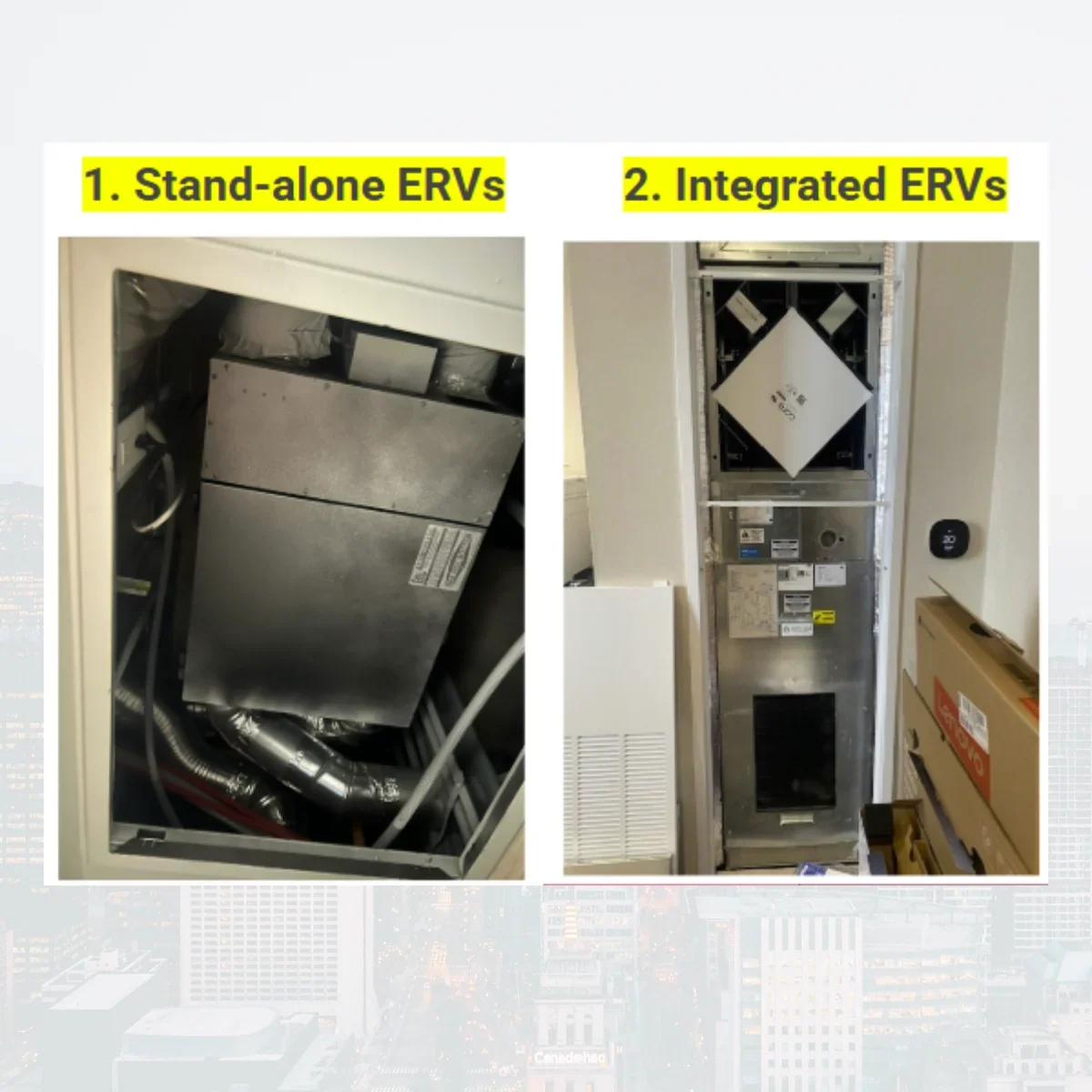
ERV systems are typically designed in two configurations:
Integrated ERV
An integrated ERV works with the suite’s heating and cooling air-distribution arrangement. Confirm the actual connections when planning maintenance.
- Connected directly to your fan coil or heat pump system
- Uses existing ductwork for air distribution
Independent ERV
An independent ERV has its own ventilation arrangement. Its filters, fans and duct connections need to be identified separately from the heating and cooling unit.
- Operates as a standalone ventilation system
- Uses dedicated ductwork separate from HVAC equipment
How An ERV Works In Your Condo
An ERV operates continuously in the background to provide balanced ventilation throughout your suite.
Here’s How The Process Works:
The sequence below follows incoming outdoor air and outgoing indoor air through the ventilation arrangement described in this guide.
- Fresh outdoor air is drawn into the system
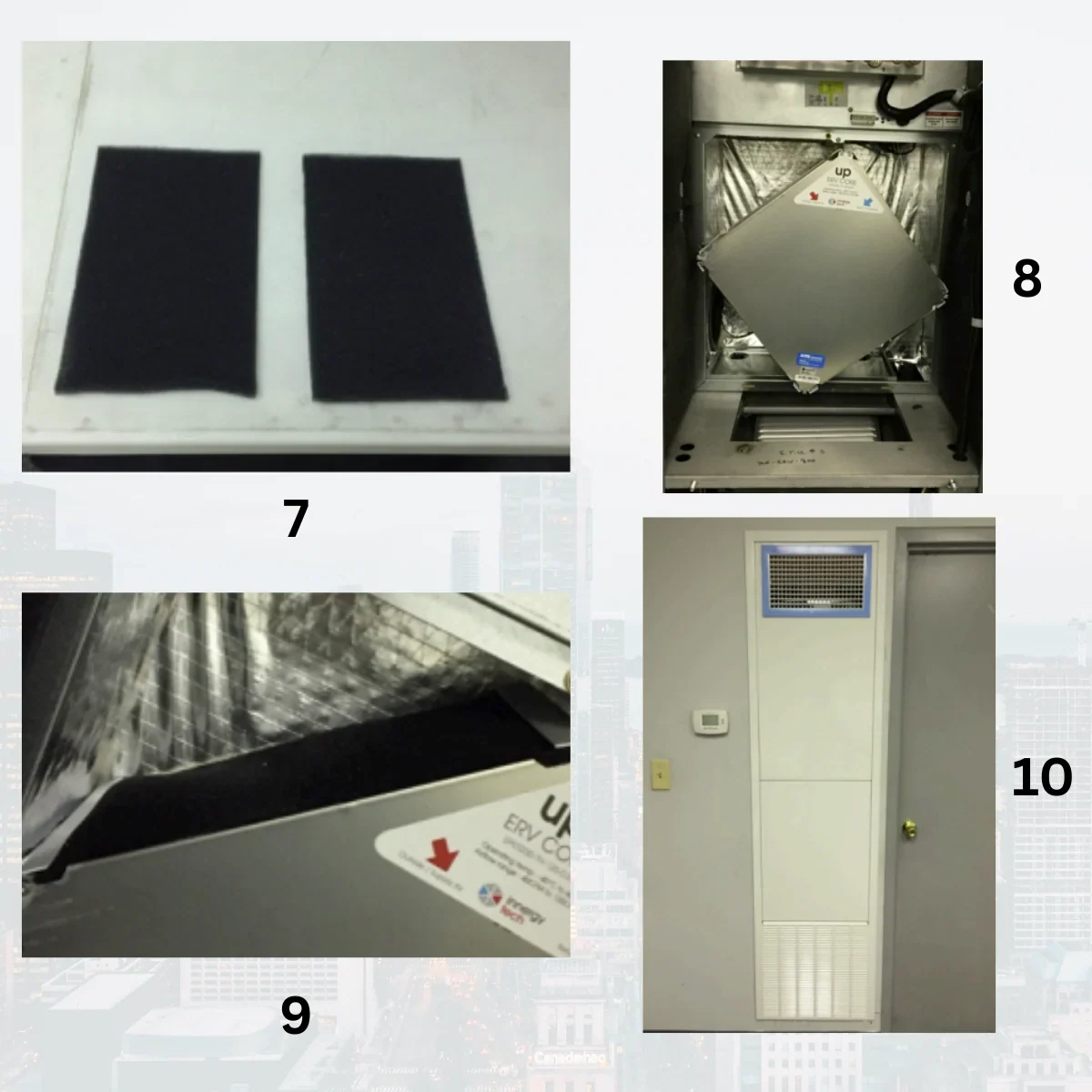
- Air passes through two (2) 1” x 7” x 12” hog hair filters and the ERV core
- Fresh air is directed into the return side of your fan coil or heat pump
- Air mixes with indoor air, gets conditioned (heated or cooled), and is supplied into your living space
At the same time:
- Stale air is extracted from bathrooms and living areas
- This air passes through the two hog hair filters & ERV core
- It is then exhausted safely outdoors
The Heat Exchange Process
At the heart of the ERV system is the heat exchange core, which allows two separate air streams to pass through without mixing.
- Heat and moisture transfer between incoming and outgoing air
- Winter: Incoming cold air is pre-heated
- Summer: Incoming warm air is pre-cooled
- Reduces strain on your HVAC system
- Improves overall energy efficiency
ERV Requirements In Condo Buildings
According to the Ontario Building Code (OBC 2020), Section 9:
- New residential buildings (including condos) must incorporate mechanical ventilation systems such as ERVs or HRVs
- These systems are required to improve energy efficiency and indoor air quality
 Main Components Of An ERV
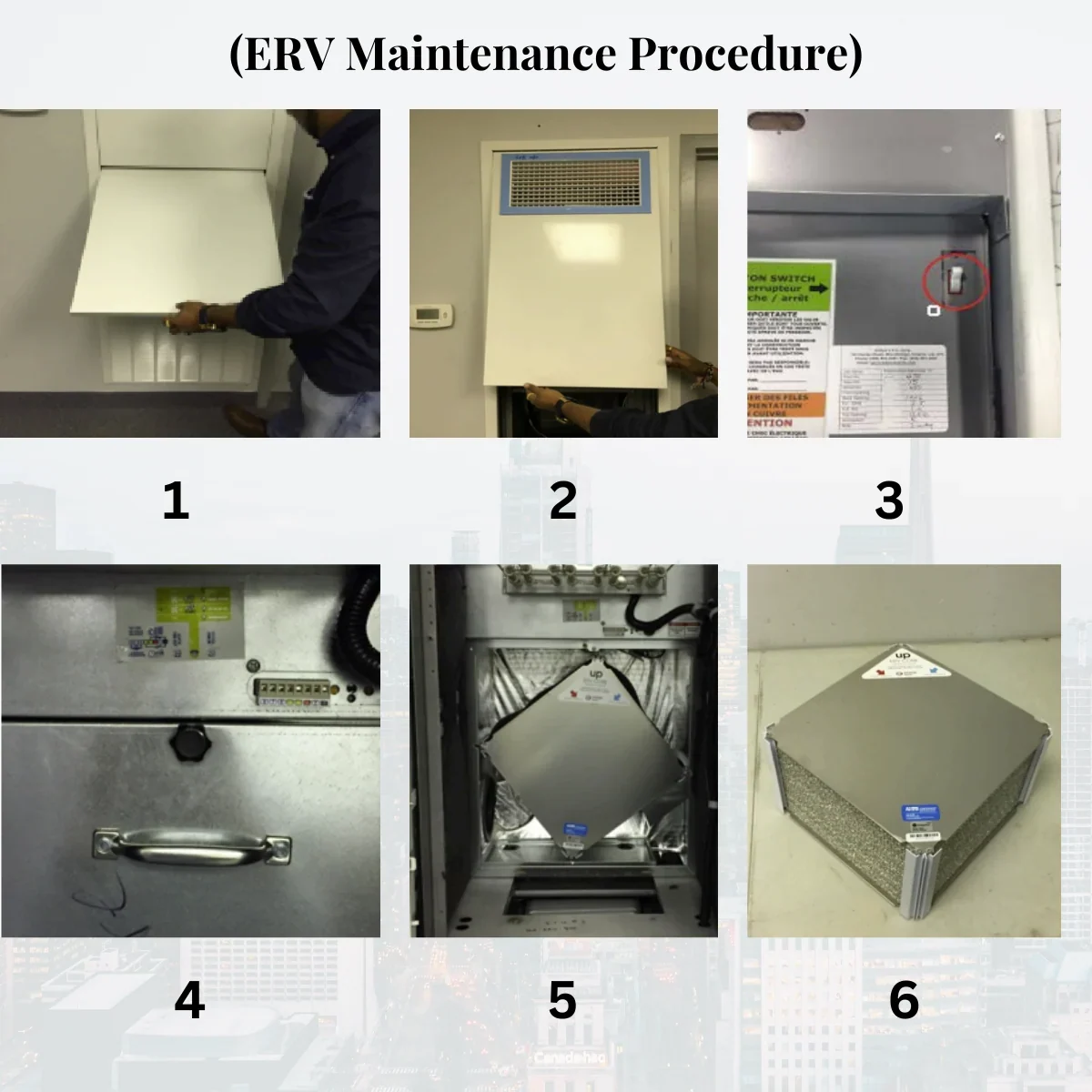
Identify the components fitted to your ERV before defining inspection and cleaning tasks; configurations and service access vary by model.
- ERV Core (Heat Exchange Core)
Transfers heat and moisture between air streams - Supply Fan (Fresh Air Fan)
Brings fresh outdoor air into the suite - Exhaust Fan (Stale Air Fan)
Removes stale indoor air - Air Filters (Supply & Exhaust)
Capture dust and protect internal components - Drain Pan / Condensate System
Manages moisture produced during operation - Access Panels / Service Doors
Allow maintenance and servicing access - Duct Connections
Connect fresh air intake and exhaust pathways - Controls / Wall Switch / Timer
Regulate airflow and system operation - Electrical Components / Control Board
Manage system performance and safety such as air sensor & humidity sensors
Important Maintenance Notes
ERV systems require regular maintenance due to continuous operation and constant exposure to outdoor air.
Key Maintenance Guidelines:
Use the manufacturer’s instructions and observed equipment condition to set cleaning methods and frequency for the installed ERV.
- Service Frequency:
Perform maintenance every 3–6 months - Filter Cleaning:
Dirty filters restrict airflow and reduce efficiency - Core Cleaning:
Vacuum only unless manufacturer allows washing - Sensor Cleaning
Make sure all air and humidity sensors are free of dust and debris - Airflow Direction:
Always reinstall the core in the correct orientation - Power Safety:
Turn off power before servicing - Fan Operation Check:
Ensure both supply and exhaust fans are working properly - Condensate Drain Check:
Prevents water damage and overflow - Noise & Vibration:
May indicate airflow restriction or loose components - Bathroom Grille Maintenance:
Annual cleaning is recommended to prevent airflow blockage - System Controller Check
Check the controller to ensure it has no signs of error code. - Bathroom Fan Timer
Inspect the timer for the bathroom fan to ensure proper operation
Most Common ERV Units In Toronto Condominiums
Reversomatic is one of the most commonly found ERV systems in Toronto condominiums. These units are typically designed as independent systems, often located within the bathroom ceiling and accessed through a service hatch.
This standalone configuration was widely used in older and mid-generation condo buildings, where ventilation systems were installed separately from the main HVAC equipment.
Semi Annual ERV Maintenance In Toronto & GTA
At Home Trade Standards, we specialize in:
- Annual ERV maintenance programs for property managers and condominium corporations
- Detailed Condo HVAC & ERV inspections and servicing for homeowners
- Preventive maintenance strategies to extend system lifespan and improve performance
Whether you manage a building or own a condo unit, our team ensures your ERV system operates efficiently, safely, and reliably year-round.