In This Guide
The best HVAC system for your condo in 2026 depends first on how your building supplies heating, cooling and ventilation. For many owners, a compatible repair, retrofit or like-for-like replacement is the practical route. Switching to a different system can involve shared infrastructure, exterior changes and building approval.
Start with the system already installed, the problem you want to solve and the scope your building permits. This guide explains common condo equipment, the differences that affect your decision and the information to collect before requesting a proposal.
Six Condo Heating & Cooling Systems To Compare
Condo HVAC describes several arrangements. Similar-looking cabinets can contain very different equipment, and some suites use more than one system. Use the model label and building information to confirm your setup.
| System | How It Serves The Suite | What To Check First |
|---|---|---|
| Water-Source Heat Pump | Uses a compressor to exchange heat with a building water loop. | Loop conditions, cabinet, chassis, electrical supply and controls. |
| Fan Coil | Passes room air over a coil supplied with building hot or chilled water. | Two-pipe or four-pipe design, seasonal operation, valves and drainage. |
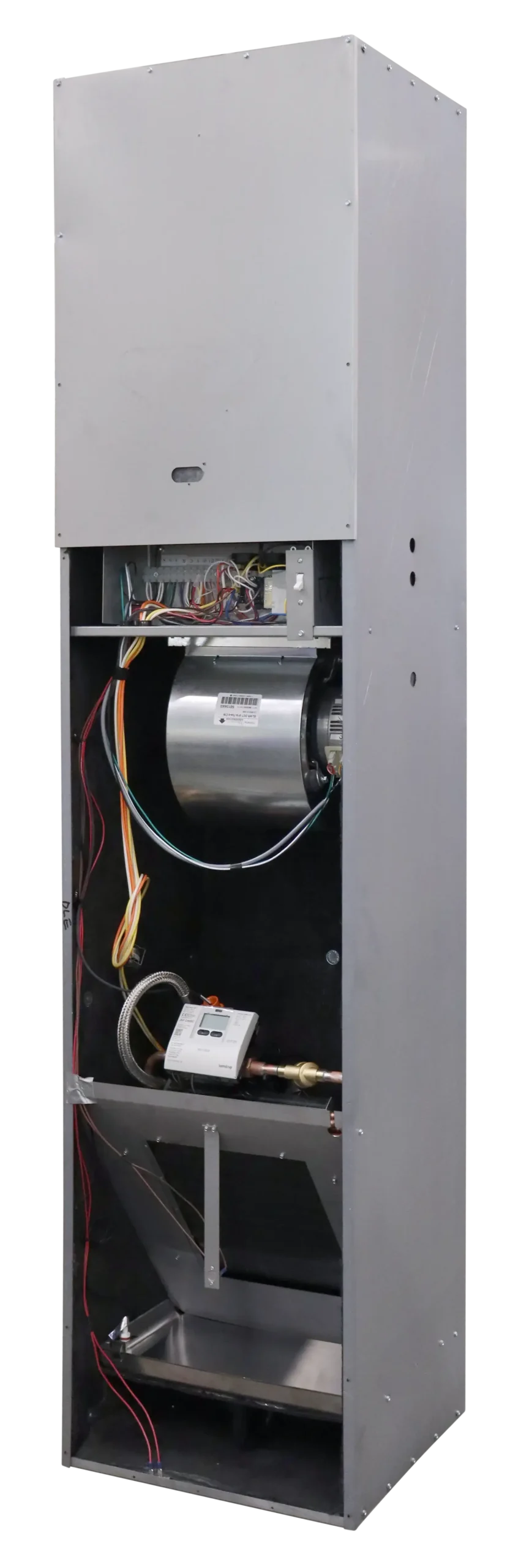
| Packaged Suite Unit | Combines heating and cooling components in a cabinet serving the suite. | Heating type, cabinet, outdoor openings, venting and utility connections. |
| PTAC Or Packaged Terminal Heat Pump | Uses a through-wall assembly for the room or zone it serves. | Sleeve, grille, voltage, heating method and condensate disposal. |
| Air Handler | Moves air through ducts and works with connected heating or cooling equipment. | Heat source, coil, blower duty, duct design and matching equipment. |
| Ductless Air-Source Heat Pump | Connects indoor equipment to an outdoor unit using refrigerant piping. | Building permission, outdoor location, winter capacity and installation route. |
Water-Source Heat Pumps: Independent Suite Control
A water-source heat pump can heat or cool the suite when the shared loop operates within the unit’s requirements. Problems with building water temperature or flow can affect an otherwise serviceable unit. A diagnosis should therefore consider both the suite equipment and the loop.
For a replacement, check the approved chassis and cabinet combination instead of choosing from a generic brand list. Our 2026 condo heat pump comparison explains Omega, Whalen and Daikin selection questions.
Fan Coils: Two-Pipe & Four-Pipe Building Systems
A two-pipe fan coil normally receives either hot or chilled water according to building operation. A four-pipe arrangement has separate heating and cooling water circuits. Available mode and control depend on the installation; a new thermostat does not create cooling when the building cannot supply it.
Fan coil repair may address a motor, valve, thermostat or drainage fault. Retrofit planning also considers the coil, insulation, drain pan and cabinet condition. Compare fan coil repair and maintenance with fan coil retrofit and replacement before deciding the scope.
Magic-Pak, Condo Pack & Other Packaged Suite Equipment
Packaged equipment may use gas or electric heating, depending on the model. Cabinet dimensions, outdoor-air paths, combustion venting where applicable and utility connections all influence replacement. A matching nominal capacity alone is not enough to establish a safe fit.
Start with the installed model and the building’s approved arrangement. Our packaged condo HVAC replacement service explains how cabinet and connection requirements shape the project.
PTAC Units & Packaged Terminal Heat Pumps
A PTAC provides cooling with a model-specific heating arrangement; a packaged terminal heat pump also uses its refrigeration cycle for heating. Confirm the exact equipment type, capacity, electrical connection, wall sleeve and exterior grille. Heating performance in cold weather and any supplemental heat must suit the application.
Use our PTAC service page when investigating a noisy, leaking or poorly performing through-wall unit.
Air Handlers & High-Velocity Duct Systems
An air handler is part of a system, not a heat source by itself. Its coil may connect to hydronic heating or refrigerant equipment. High-velocity systems have their own duct and airflow requirements. Assess the connected heat source, blower, controls and duct condition before replacing the cabinet or changing capacity.
Ductless Heat Pumps & Outdoor Equipment
A ductless system may suit an approved installation where an outdoor unit and piping route are feasible. It is not a direct substitute for a shared-water-loop unit. The design needs heating-load and low-temperature performance checks, an acceptable outdoor location, drainage and building approval. See ductless heat pump services for an assessment.
Baseboard Heating, ERV & HRV: Different Roles
Electric or hydronic baseboards provide heat; they do not provide cooling or fresh-air ventilation. A suite heated by baseboards may use separate cooling equipment. Identify the baseboard type and the source of heat before planning changes.
An ERV or HRV exchanges indoor and outdoor air with energy or heat recovery. It supports ventilation but does not replace the suite’s main heating and cooling system. Filter condition, air balancing, duct connections and controls matter. Explore ERV and HRV maintenance if the concern is stale air, humidity or ventilation performance.
Condo HVAC Repair, Retrofit & Replacement
Choose repair when diagnosis identifies a serviceable system with a localized fault. Consider retrofit when suitable existing infrastructure can remain while worn components are renewed. Consider replacement when condition, recurring failures, parts availability or the proposed repair cost make a new compatible assembly worth comparing.
Like-for-like replacement can simplify the work, but the model generation, connections and controls still need verification. Compare proposals that include the same access, disposal, controls, drainage and commissioning scope. HTS’s warranty is one year parts and labour against the work completed; separate manufacturer equipment terms should be identified in the proposal.
Condo HVAC Efficiency, Noise & Comfort
Start with the symptom: uneven temperatures, weak airflow, noise, leaks or high energy use. Equipment sizing, dirty components, ducts, controls and building operation can each contribute. A higher efficiency label does not resolve a blocked return, poor water flow or a control mismatch.
Compare ratings for the correct equipment category and matched configuration. Outdoor air-source ratings should not be used as a direct ranking for water-source heat pumps or fan coils. Ask which improvements are expected from the proposed work and which building conditions remain outside that scope.
Planning A Condo HVAC Project In 2026 Or 2027
Arrange an inspection before ordering equipment. Obtain a written proposal with model numbers, installation scope, exclusions, warranty and quote validity. If the project moves into 2027, request updated supplier pricing: applicable tariffs, freight, exchange rates and manufacturer changes could affect some equipment, but a universal price increase is not established. Current Canadian tariff information can help verify the basis of a quoted surcharge.
Condo HVAC Assessments In Toronto & The GTA
Home Trade Standards works with condo owners and property managers on in-suite HVAC and building mechanical systems. Send your model label, thermostat and cabinet photos, describe the symptoms and include any building requirements. Our service-area directory helps you find local service information. For a recurring issue across several suites, management can coordinate a building-level investigation alongside the in-suite checks.
Condo HVAC Selection Questions
Compare the proposed system with the building’s existing services, suite layout and installation constraints before selecting equipment.